Rivet & Fastener FAQ
Find answers about blind rivet types, sizes, grip ranges, materials, applications, customization, quality and sourcing.

Looking for the right Product for your application?
Select a product category to find related FAQs
Self-Clinching Fasteners
Self-Clinching Fasteners (Nuts, Standoffs, Studs, Pins & Special Screws)

Product Basics & Types
What is a blind rivet?
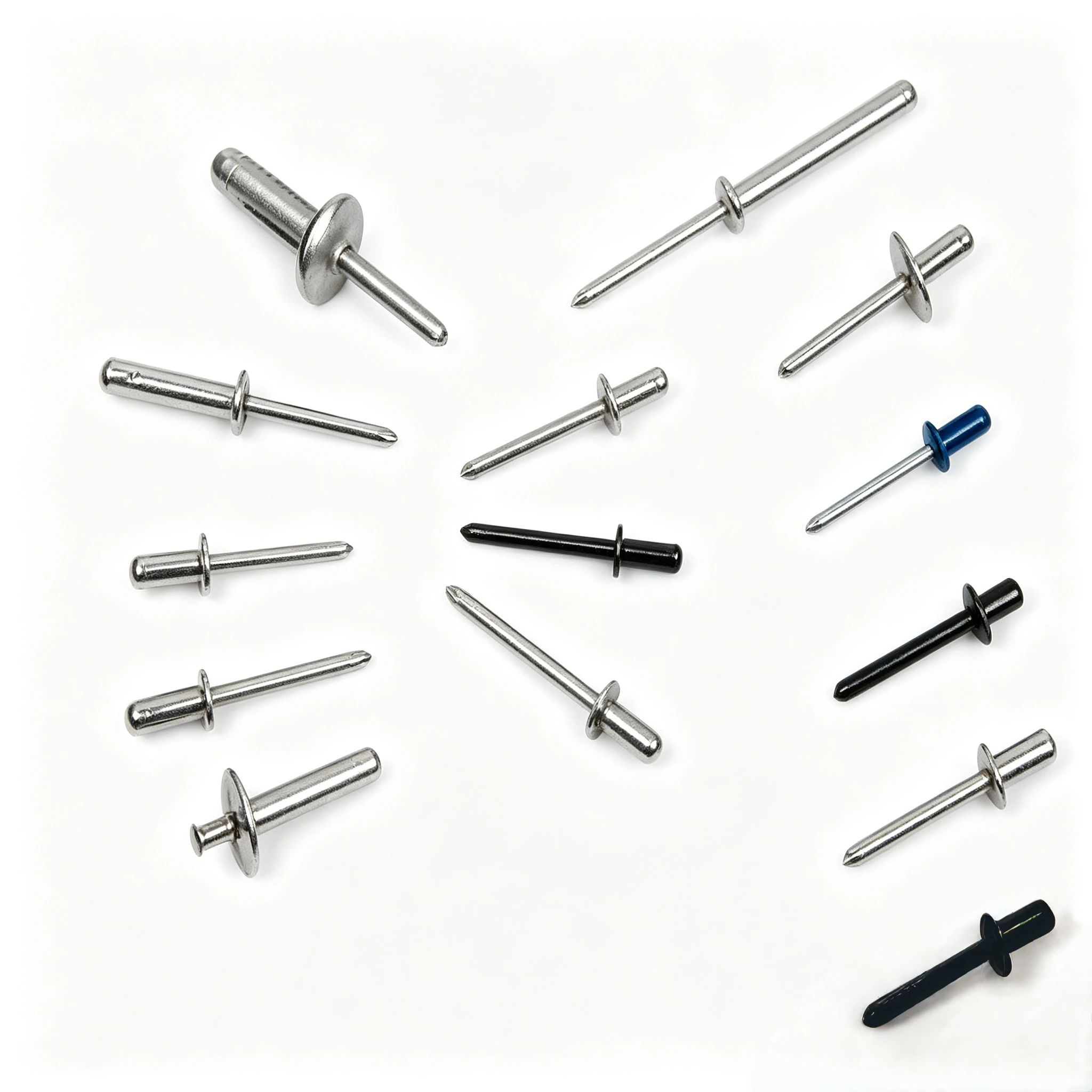
A blind rivet is a mechanical fastener used to join two or more components when access is available from only one side of the joint. It consists of a rivet body and a mandrel. During installation, the mandrel is pulled through the rivet body, causing the body to deform and form a fastening point on the blind side.
Blind rivets are widely used for sheet metal, enclosures, equipment, and other applications where access to the rear side is limited.
Blind Rivets
How to Read a Blind Rivet Datasheet
What is the difference between a blind rivet and a pop rivet?
In most industrial applications, blind rivet and pop rivet refer to the same general type of fastener. “Pop rivet” is a commonly used name for a blind rivet, while “blind rivet” is the more general technical term.
Blind rivets are available in different body materials, mandrel materials, head styles, diameters, lengths, and grip ranges. The appropriate specification depends on the joint, material, hole size, and application requirements.
Blind Rivets
What is an open-end blind rivet?
An open-end blind rivet is a common general-purpose blind rivet design. Its rivet body is open at the rear, allowing the mandrel to pass through the body during installation and form the blind-side portion of the joint.
Open-end blind rivets are widely used for general sheet-metal and industrial assembly applications where a standard blind-rivet design is suitable.
Selection should be based on the required diameter, length, grip range, material, head style, and application conditions.
What is a multi-grip blind rivet?
A multi-grip blind rivet is designed to accommodate a wider range of joint thicknesses than a conventional single-grip specification.
This can be useful when material thickness varies between assemblies or when one fastener needs to cover several thickness conditions.
However, the actual grip range must always be checked against the manufacturer's specification. A multi-grip design does not mean that one rivet is suitable for every thickness.
Blind Rivets
Blind Rivet Grip Range
What is a rivet nut?
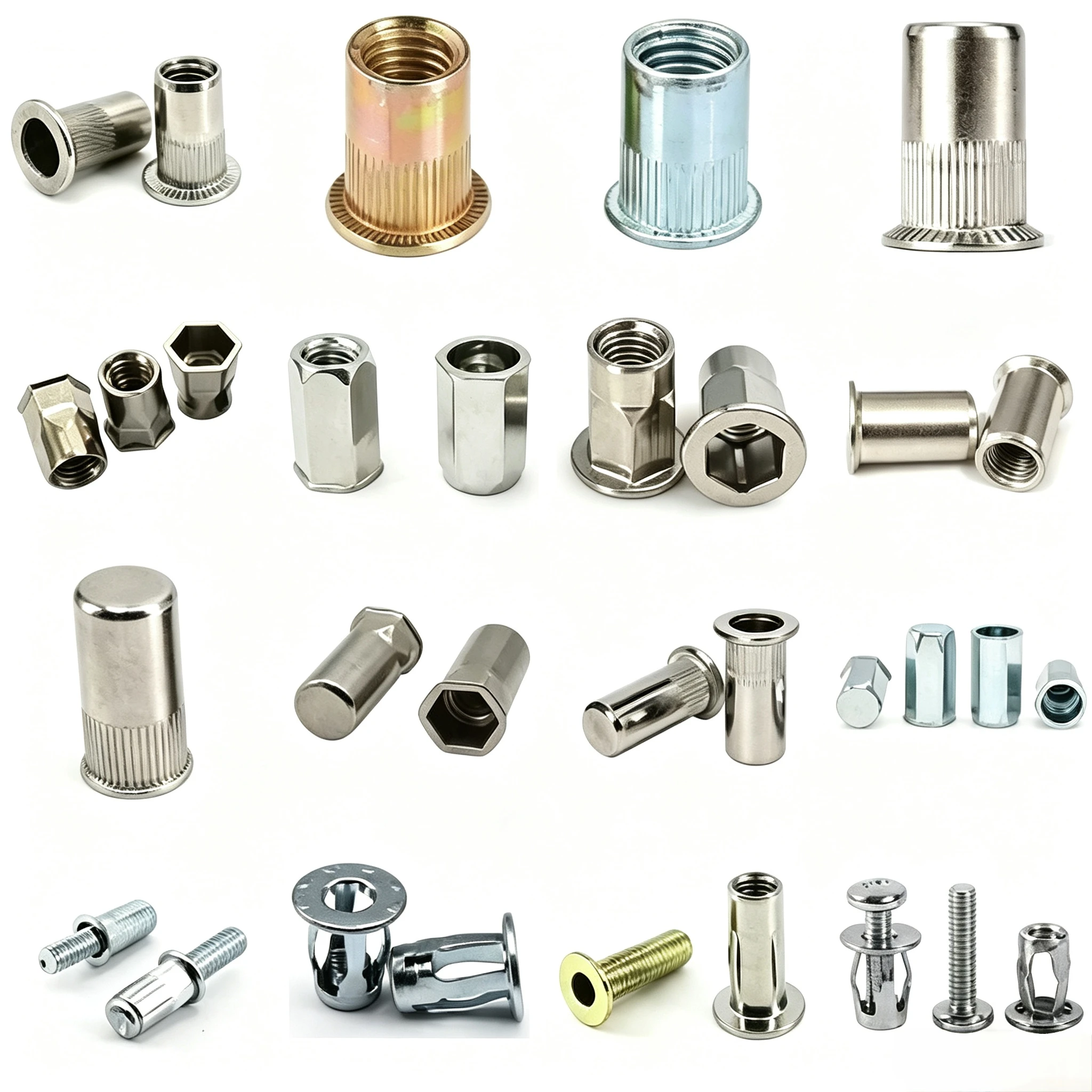
A rivet nut, also called a threaded insert, is a fastener that creates a reusable internal thread in sheet metal or other thin materials.
It can be installed from one side of the workpiece, making it useful when the rear side of the panel is difficult or impossible to access. Once installed, it provides a threaded point for attaching a screw or bolt.
Rivet nuts are commonly used in enclosures, sheet-metal assemblies, automotive components, equipment, and other applications requiring a threaded connection in thin material.
Rivet Nuts
What is a self-clinching fastener?
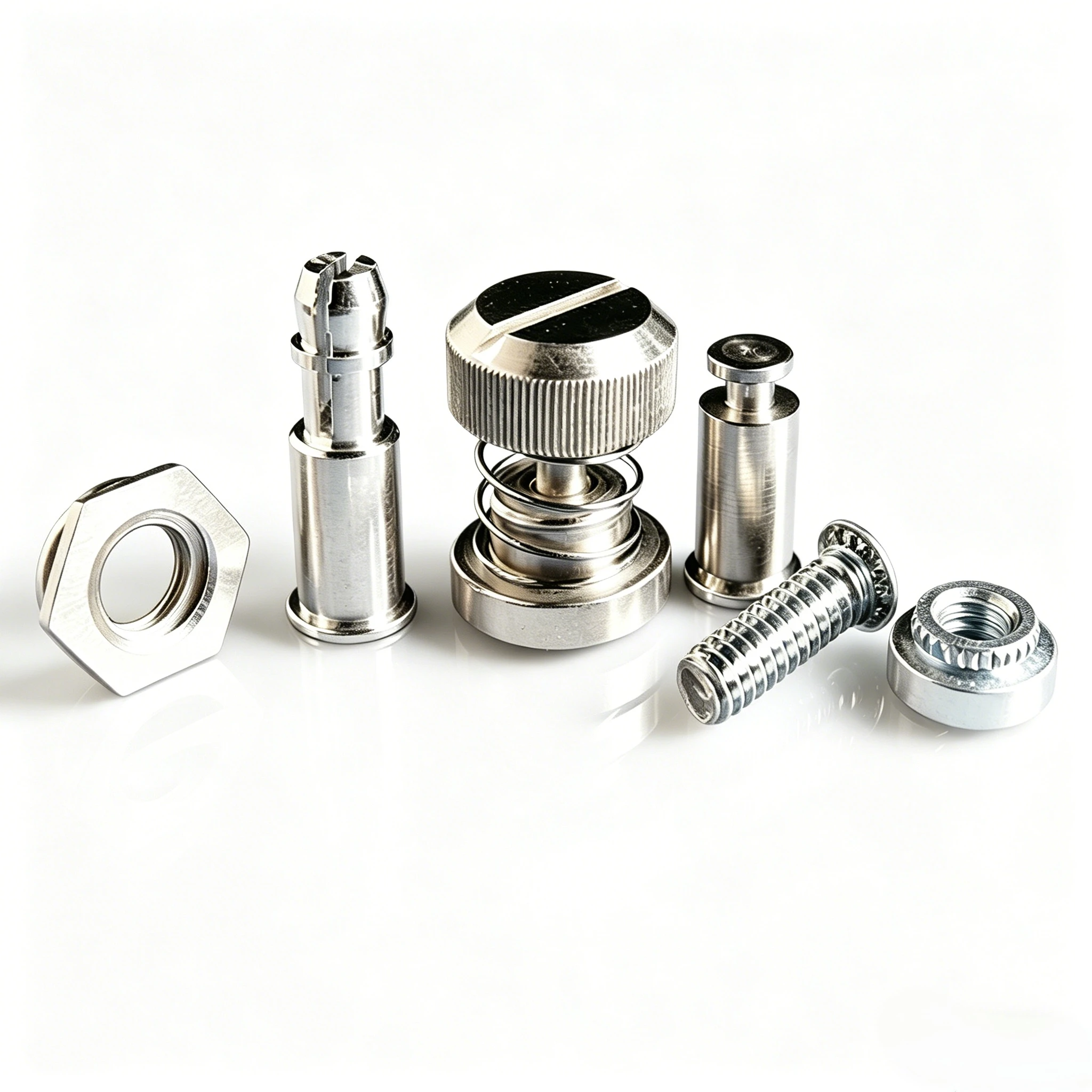
A self-clinching fastener is a mechanically installed fastener designed to become permanently secured in a sheet-metal panel.
During installation, the fastener is pressed into a properly prepared hole, allowing part of the panel material to flow into the fastener's locking feature. This creates a secure attachment without requiring a conventional nut on the rear side.
Self-clinching fasteners are commonly used in electrical enclosures, sheet-metal assemblies, electronics, and equipment manufacturing.
Self-Clinching Fasteners
What are blind rivets commonly used for?
Blind rivets are commonly used to join sheet metal, panels, brackets, enclosures, and other components where only one side of the assembly is accessible.
Typical applications include industrial equipment, electrical enclosures, HVAC systems, automotive components, metal fabrication, appliances, and general assembly.
The appropriate blind rivet depends on factors such as joint material, total thickness, hole size, grip range, corrosion environment, and required joint performance.
Blind Rivets
What are the different types of blind rivets?
Blind rivets are available in several designs for different joint requirements. Common types include open-end, closed-end, multi-grip, structural, large flange, pull-thru, tri-fold, and peel-type blind rivets.
The main differences are related to rivet body design, deformation behavior, grip capability, head configuration, and application requirements.
When selecting a type, consider the joint materials, total thickness, hole size, access conditions, environmental requirements, and the performance required from the finished joint.
Blind Rivet Types
What is a closed-end blind rivet?
A closed-end blind rivet has a closed rivet body that helps prevent the mandrel from passing completely through the rivet body after setting. This design can be selected when the application requires a more enclosed fastening configuration.
Closed-end blind rivets are commonly considered for applications where containment of the rivet passage is important, including certain equipment and enclosure applications.
Open-End vs Closed-End Blind Rivets
What is a structural blind rivet?
A structural blind rivet is designed for applications with more demanding joint requirements than general-purpose blind rivets.
Structural designs typically use a specialized rivet body and mandrel configuration intended to provide controlled deformation and secure mandrel retention after installation.
The correct structural blind rivet should be selected according to the manufacturer's specifications and the requirements of the joint, including material, thickness, hole size, and application conditions.
Structural Blind Rivets
What are the different types of rivet nuts?
Rivet nuts are available in different body shapes, head styles, thread sizes, materials, and grip ranges.
Common configurations include round-body and hex-body rivet nuts, as well as different head designs for specific panel and installation requirements.
The correct type depends on the thread size, panel thickness, installation hole, material, grip range, and required resistance to rotation or pull-out.
Rivet Nuts
What are self-clinching nuts, studs and standoffs used for?
Self-clinching nuts, studs, and standoffs provide different fastening functions in sheet-metal assemblies.
- Self-clinching nuts provide permanent internal threads for screws or bolts.
- Self-clinching studs provide a permanent externally threaded or projecting fastening point.
- Self-clinching standoffs create a fixed threaded or spacer point between components.
The appropriate type depends on the panel material and thickness, thread requirements, installation method, and assembly design.
Self-Clinching Fasteners
Selection & Specs
How do I choose the right fastener for my application?
Choosing the right fastener depends on the joint design, materials, panel or material thickness, access conditions, hole requirements, environment, and required connection performance.
First determine how the components need to be joined and whether access is available from one or both sides. Then consider the appropriate fastener type, size, material, grip range or thread specification, and finish.
For blind rivets, key specifications typically include rivet diameter, length, grip range, body and mandrel materials, head style, and hole size. For rivet nuts and self-clinching fasteners, thread size and panel specifications are also important.
If you are unsure which fastener is suitable, send us your application details or drawing for review.
Blind Rivets
Rivet Nuts
Self-Clinching Fasteners
What is the grip range of a blind rivet?
The grip range is the range of total material thickness that a particular blind rivet is designed to accommodate.
For example, a rivet specified with a particular grip range is intended for joints whose combined material thickness falls within that range. The grip range is different from the overall length of the rivet.
When selecting a blind rivet, measure the actual joint thickness and compare it with the specified grip range. If the joint thickness falls outside the specified range, the rivet may not form the intended joint.
How to Read a Blind Rivet Datasheet
Blind Rivet Hole Size
What hole size is required for a blind rivet?
The required hole size depends on the blind rivet's nominal diameter and the manufacturer's dimensional specification.
The hole should provide the correct fit for the selected rivet. A hole that is too small can interfere with installation, while an oversized or poorly prepared hole can affect how the rivet forms and fits in the joint.
For production applications, always check the specified hole diameter for the exact rivet series rather than applying one general hole-size rule to all blind rivets.
Blind Rivet Hole Size
Blind Rivets
What specifications should I check when selecting a blind rivet?
Important blind rivet specifications typically include:
- Rivet diameter
- Rivet length
- Grip range
- Body material
- Mandrel material
- Head style
- Hole size
- Finish or surface treatment
- Application requirements
Depending on the application, you may also need to review the rivet's dimensional information, installation requirements, and applicable performance or quality specifications.
A blind rivet datasheet can help you compare these specifications before selecting a product.
How to Read a Blind Rivet Datasheet
How do I choose the right blind rivet size?
The main factors when choosing a blind rivet size are rivet diameter, grip range, rivet length, hole size, material, and head style.
Start by confirming the total thickness of the materials being joined. Then select a rivet with a grip range that covers the actual joint thickness and a diameter suitable for the specified hole.
Material compatibility and application conditions should also be considered, particularly where corrosion resistance or different materials are involved.
Always check the manufacturer's dimensional specifications rather than selecting a rivet based only on diameter or length.
Blind Rivets
Blind Rivet Hole Size
How do I choose the correct blind rivet length?
Blind rivet length should be selected according to the total material thickness and the rivet's specified grip range, rather than by length alone.
First determine the combined thickness of the materials being joined. Then select a rivet specification whose grip range covers that thickness and whose overall dimensions are suitable for the application.
The required length can vary between rivet designs, so the manufacturer's datasheet should be used to confirm the correct specification.
If the application involves unusual material thickness, a drawing or sample can help confirm the appropriate rivet.
How to Read a Blind Rivet Datasheet
Blind Rivet Grip Range
How do I choose the right rivet nut?
Selecting a rivet nut starts with the required thread size, panel thickness, installation hole, and rivet nut material.
You should also consider the rivet nut body type, head style, grip range, and whether the application requires additional resistance to rotation or other specific performance characteristics.
The selected rivet nut must be compatible with both the panel and the mating screw or bolt. For production applications, confirm the manufacturer's dimensional specifications before finalizing the part.
If you have a drawing, sample, or existing part number, we can help review the required specification.
Rivet Nuts
How do I choose the right self-clinching fastener?
The selection of a self-clinching fastener depends primarily on the panel material, panel thickness, fastener type, thread or stud specification, hole size, and assembly requirements.
First identify whether you need a self-clinching nut, stud, standoff, or another configuration. Then confirm the required thread size or dimensions and make sure the fastener is designed for the specific panel material and thickness.
The installation hole and applicable installation method should also follow the manufacturer's specifications.
Self-Clinching Fasteners
Materials & Applications
What materials are fasteners available in?
Fasteners can be manufactured from a range of materials depending on the product type and application requirements. Common options include aluminum, steel, stainless steel, copper, brass, and Monel.
The appropriate material depends on factors such as joint materials, corrosion environment, required properties, weight considerations, and application conditions.
For a specific fastener, the available material options may vary by product series and specification. If you have a required material or application condition, we can confirm suitable options based on your requirements.
Blind Rivets
Rivet Nuts
Self-Clinching Fasteners
What is the difference between aluminum and stainless steel blind rivets?
Aluminum and stainless steel blind rivets are used in different application conditions.
Aluminum blind rivets are lightweight and can be suitable when weight and general corrosion considerations are important. Stainless steel blind rivets are often selected when higher corrosion resistance or compatibility with stainless-steel assemblies is required.
The choice should not be based on material alone. Joint materials, environmental exposure, required performance, hole conditions, and the specific rivet design should also be considered.
For a particular application, the appropriate material should be confirmed against the product specification and operating conditions.
Blind Rivets
Can blind rivets be used to join different materials?
Yes. Blind rivets can be used to join components made from different materials, provided that the selected rivet is compatible with the joint and application conditions.
When joining dissimilar materials, consider material compatibility, corrosion risk, joint thickness, hole requirements, and the operating environment.
For example, the combination of the rivet material and the materials being joined can affect corrosion behavior over time. Material selection should therefore be considered together with the complete joint design rather than selecting the rivet based only on its nominal size.
Blind Rivets
What materials are rivet nuts available in?
Rivet nuts are commonly available in materials such as steel, stainless steel, and aluminum, depending on the product series and specification.
The material should be selected according to the panel material, environmental conditions, corrosion requirements, thread requirements, and application conditions.
For example, stainless steel may be considered for applications requiring greater corrosion resistance, while aluminum can be useful when weight is an important consideration.
The available material options depend on the specific rivet nut design, so the required thread size, body type, panel thickness, and application should be confirmed when selecting a material.
Rivet Nuts
What materials are blind rivets available in?
Blind rivets are available in different body and mandrel material combinations, depending on the rivet series and application.
Common materials include aluminum, steel, stainless steel, copper, and other application-specific options. The body and mandrel do not necessarily have to be made from the same material.
When selecting a blind rivet, consider the materials being joined, the operating environment, corrosion requirements, and the required fastener specification.
For applications with specific material requirements, provide the rivet size, material preference, and application details so the appropriate specification can be confirmed.
Blind Rivets
When should I use stainless steel blind rivets?
Stainless steel blind rivets may be suitable when the application requires increased corrosion resistance or when stainless steel is preferred for material compatibility.
They can be considered for equipment, enclosures, outdoor applications, and other assemblies exposed to conditions where corrosion resistance is an important consideration.
However, stainless steel is not automatically the right choice for every application. The joint materials, environment, fastener design, and required specifications should all be reviewed before selection.
If you are unsure which material is appropriate, provide the application environment and joint materials for evaluation.
Blind Rivets
What applications are blind rivets commonly used for?
Blind rivets are widely used for assemblies where components need to be joined from one accessible side.
Common applications include sheet-metal fabrication, electrical enclosures, industrial equipment, HVAC systems, appliances, automotive components, and general metal assembly.
The appropriate rivet type depends on the joint design and operating conditions. Factors such as material, thickness, hole size, grip range, corrosion environment, and access to the joint should be considered before selection.
For applications with specific requirements, a drawing, sample, or application description can help identify a suitable rivet specification.
can be confirmed.
Blind Rivets
What applications are rivet nuts and self-clinching fasteners used for?
Rivet nuts and self-clinching fasteners are commonly used in sheet-metal and equipment assemblies where a threaded or permanent fastening point is needed.
Rivet nuts are useful when a removable screw or bolt connection is required in thin material, particularly when access to the rear side of the panel is limited.
Self-clinching nuts, studs, and standoffs are commonly used in electrical enclosures, electronics, sheet-metal assemblies, and industrial equipment where the fastener needs to be permanently secured to the panel.
The right choice depends on the panel material, thickness, thread requirements, installation method, and assembly design.
Rivet Nuts
Self-Clinching Fasteners
Custom / OEM / Special
What is the difference between standard and special fasteners?
Standard fasteners are manufactured according to established dimensions, materials, configurations, and commonly used specifications. They are generally suitable when an existing standard product meets the application's requirements.
Special fasteners are developed or modified for requirements that cannot be fully met by an existing standard specification. These requirements may involve dimensions, materials, head styles, grip ranges, finishes, or other product features.
For most applications, starting with a suitable standard fastener can simplify sourcing and production. Custom development can be considered when the standard options do not meet the required specifications.
Blind Rivets
Rivet Nuts
Self-Clinching Fasteners
When do I need a custom fastener?
A custom fastener may be required when available standard products cannot meet a specific application or assembly requirement.
Typical reasons may include a non-standard dimension, special material, specific head configuration, unusual grip requirement, particular surface finish, or other design requirements.
Before developing a custom fastener, it is usually worth checking whether an existing standard product can meet the application. If not, a drawing, sample, or detailed specification can be used to evaluate the custom requirement.
Custom Fasteners
Request a Quote
Can you manufacture custom fasteners based on a drawing or sample?
Yes. RivetFast can review fastener requirements based on a technical drawing, sample, specification, or existing part information.
The drawing or sample helps confirm important details such as dimensions, material, head style, thread, grip range, finish, and other application requirements.
After reviewing the information, we can confirm whether the requirement can be supported, clarify any missing specifications, and provide the applicable quotation and production information.
For the most accurate evaluation, provide the latest drawing or sample together with the required quantity and application details.
Custom Fasteners
Request a Quote
Can you customize fastener materials, dimensions, head styles or finishes?
Yes, depending on the product and specification. RivetFast can evaluate requirements involving material, dimensions, head configuration, grip range, and surface finish for suitable fastener products.
Available options depend on the product design and production requirements. For example, different fastener applications may require different material or finish combinations.
If you have a specific requirement, send us the drawing, sample, or detailed specification. We can review the requirement and confirm the available options.
Custom Fasteners
Request a Quote
When should I choose a standard fastener?
A standard fastener is generally the preferred option when an existing specification meets the requirements of your application.
Standard products can simplify product selection, quotation, production planning, and repeat purchasing. They may also offer more predictable availability and lead times than specially developed products.
Before choosing a standard fastener, confirm the required dimensions, material, grip range or thread, finish, and application conditions.
If you already have a part number or specification, you can send it to us and we can help confirm the corresponding product.
Request a Quote
Can you manufacture custom fasteners for OEM applications?
Yes. Custom fasteners can be developed for OEM applications when a standard product does not meet the required specification.
OEM projects may involve specific dimensions, materials, finishes, packaging, labeling, or other product requirements. The exact scope depends on the product and project.
For an OEM inquiry, it is helpful to provide the drawing or specification, required material, estimated quantity, target application, and packaging requirements. This allows the product and production requirements to be reviewed more accurately.
Custom Fasteners
Request a Quote
What fastener specifications can be customized?
Depending on the product and production requirements, customization may include dimensions, head styles, grip ranges, materials, surface finishes, and other product details.
For some projects, packaging, labels, cartons, pallets, or other delivery requirements can also be coordinated.
The available customization depends on the specific fastener type and design. A technical drawing or sample is the most effective way to confirm which specifications can be supported.
Custom Fasteners
Request a Quote
Quotation & Procurement
What information should I provide for a fastener quotation?
For an accurate fastener quotation, it is helpful to provide the product type, part number or drawing, size, material, finish, required quantity, and delivery requirements.
For blind rivets, key information may include diameter, length, grip range, body and mandrel materials, and head style. For rivet nuts or self-clinching fasteners, thread size and panel specifications may also be required.
If the exact specification is not available, you can send us a drawing, sample, photo, or existing part number for review.
Request a Quote
What specifications should I include when requesting a quote?
The more complete the product information, the more accurately we can prepare a quotation.
For a typical fastener RFQ, include:
- Product type or part number
- Dimensions or drawing
- Material
- Finish or surface treatment
- Required quantity
- Packaging requirements, if applicable
- Target delivery location or shipping requirements
For custom or OEM fasteners, a technical drawing or sample is especially helpful.
If some information is not available, send the details you have and we can confirm the remaining specifications with you.
Request a Quote
Can I request a quotation based on a drawing or sample?
Yes. A quotation can be reviewed based on a technical drawing, physical sample, specification, or existing part number.
A drawing can help confirm dimensions, material, tolerances, finish, and other technical requirements. A physical sample can also be useful when the original specification is unavailable.
For custom or replacement fasteners, providing the required quantity and application information along with the drawing or sample can help us evaluate the requirement more efficiently.
Custom Fasteners
Request a Quote
Do you supply standard fastener sizes?
Yes. RivetFast supplies standard fasteners across its main product lines, including blind rivets, rivet nuts, and self-clinching fasteners.
Standard products are generally the first option to consider when the available specification meets your application requirements. They can help simplify product selection, production planning, and repeat purchasing.
If you have a standard part number, size, or specification, send it to us and we can confirm the corresponding product and available options.
Blind Rivets
Rivet Nuts
Self-Clinching Fasteners
What is the MOQ for fasteners?
The MOQ depends on the product type, specification, material, required quantity, production requirements, and whether the order involves standard or custom products.
Standard products may have different MOQ requirements from specially developed or less commonly stocked specifications. Custom fasteners may also require a different production quantity depending on the tooling and manufacturing requirements.
For an accurate MOQ, provide the product specification and required quantity. We can then confirm the applicable order quantity for your project.
Request a Quote
What is the lead time for fasteners?
Fastener lead time depends on the product specification, stock status, order quantity, material, production requirements, and customization.
Stock items may have a shorter processing time, while standard production and custom/OEM orders may require additional manufacturing time. Packaging and delivery requirements can also affect the overall schedule.
When requesting a quotation, provide your required quantity and target delivery date. We can confirm the applicable production and delivery schedule based on the specific order.
Request a Quote
Can you support bulk orders and repeat orders?
Yes. RivetFast supports bulk orders and repeat purchasing for its main fastener product lines.
For recurring requirements, keeping the product specification, packaging requirements, and quality requirements consistent can help simplify repeat orders.
For larger projects, it is helpful to provide the expected quantity, delivery schedule, and any recurring requirements in advance so production and supply arrangements can be reviewed accordingly.
Blind Rivets
Rivet Nuts
Request a Quote
Quality & Samples
Can I request samples before placing a bulk order?
Yes. Samples can be requested before a bulk order, depending on the product and project requirements.
Samples are useful for checking dimensions, material, fit, appearance and application compatibility before moving to larger quantities. Sample availability, quantity and shipping arrangements may vary by product.
For custom or drawing-based fasteners, we recommend providing the drawing, sample or specification so we can review the requirements before sample preparation.
What quality inspections are available for your fasteners?
Quality inspections depend on the product and specification. Available inspection capabilities include dimensional inspection, tensile testing, hardness testing, salt spray testing and material composition analysis by spectrometer.
For threaded fasteners and applicable products, additional checks such as torque or thread-related testing may also be available.
The inspection items can be confirmed according to the product specification and project requirements.
What standards do your fasteners comply with?
Fasteners can be supplied according to applicable product, dimensional or material standards, depending on the product and specification.
Common requirements may include standards such as ISO, DIN, ASTM or other customer-specified standards where applicable.
ISO 9001 refers to our quality management system and should not be confused with a specific product standard. If you require compliance with a particular standard, please provide the standard number or product specification for confirmation.
Can you provide inspection reports or quality documents?
Yes. Quality documents can be provided depending on the product, order and customer requirements.
Depending on the project, documentation may include inspection records, dimensional reports, material-related documents or other agreed quality records.
If specific documentation is required, please let us know when requesting a quotation so the requirements can be confirmed in advance.
Can you provide material certificates or test reports?
Material certificates and applicable test reports may be available depending on the product, material and order requirements.
For example, material-related documentation or test results can be considered for projects with specific material or quality requirements.
Please provide the required document type, material specification and applicable standard when requesting a quotation so we can confirm availability.
How do you ensure consistent quality for bulk orders?
For bulk orders, quality consistency is supported through controlled production and inspection processes based on the agreed product specification.
Key requirements such as dimensions, material, finish and other specified characteristics are confirmed before production. Inspection is then carried out according to the applicable product and project requirements.
For repeat orders, keeping the same approved specification and quality requirements helps maintain consistency between batches.
Not sure Which Product To choose?
Use our quick comparison guide to find the best solution for your application.
Need Help? Request a Quote
No complete specifications? No problem. Send us what you have and we’ll help confirm the requirements
No complete specifications? No problem. Send us what you have and we’ll help confirm the requirements.