Blind rivet grip range is one of the most critical factors when selecting the right fastener, yet it is often misunderstood. Choosing the wrong grip range can lead to weak joints, installation failures, or material damage. This guide explains what grip range is, why it matters, and how to choose the correct blind rivet size for your application.
Key Takeaways
Blind rivet grip range refers to the minimum and maximum material thickness a rivet can fasten.
Choosing the correct grip range ensures strong and reliable joints.
Always measure total material thickness before selecting a rivet.
Incorrect grip range can cause installation failure or weak connections.
What Is Blind Rivet Grip Range?
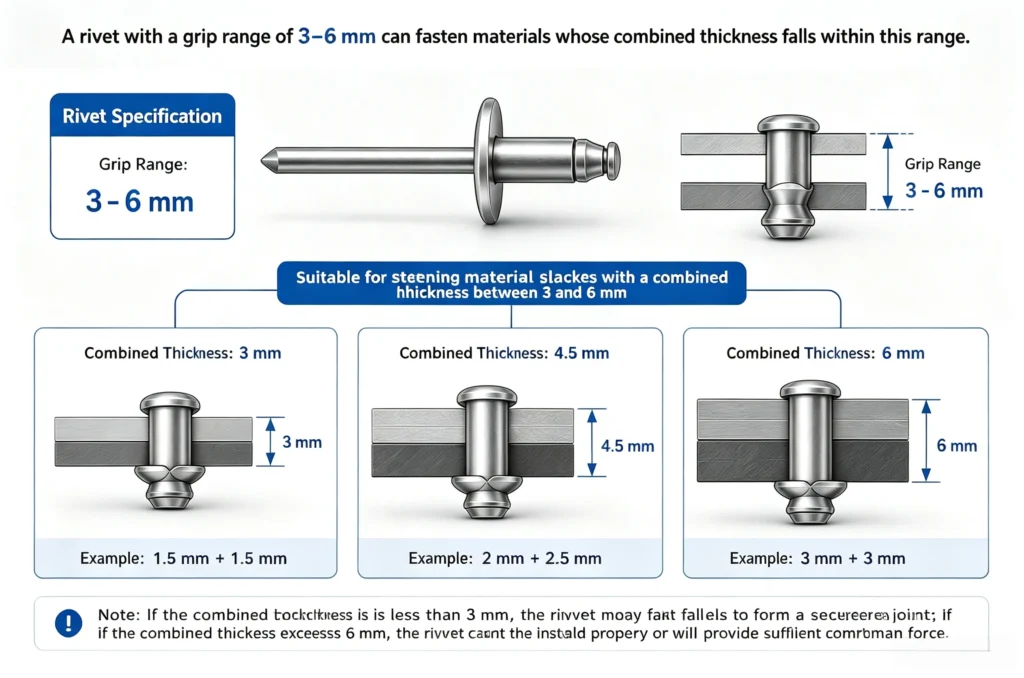
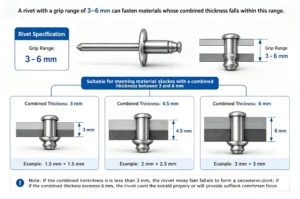
Blind rivet grip range is the range of material thicknesses that a rivet can securely fasten. It is usually defined by a minimum and maximum value.
For example, a rivet with a grip range of 3–6 mm can fasten materials whose combined thickness falls within that range.
Why Grip Range Matters in Rivet Selection
Grip range directly impacts fastening reliability and durability. A properly selected rivet ensures tight clamping and long-term performance.
It helps to:
Maintain joint strength
Prevent loosening under vibration
Reduce failure risk
How Blind Rivet Grip Range Affects Joint Strength
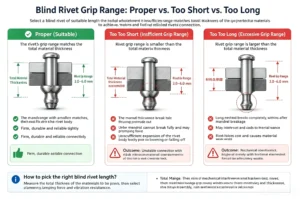
The grip range determines how the rivet expands and locks materials together during installation.
Too short: weak expansion and poor hold
Too long: improper deformation and reduced clamping force
How to Measure Grip Range for Blind Rivets
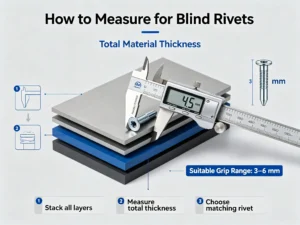
Step 1: Measure Total Material Thickness
Use a caliper or gauge to measure all layers combined.
Step 2: Match with Rivet Grip Range
Choose a rivet whose grip range fully includes the measured thickness.
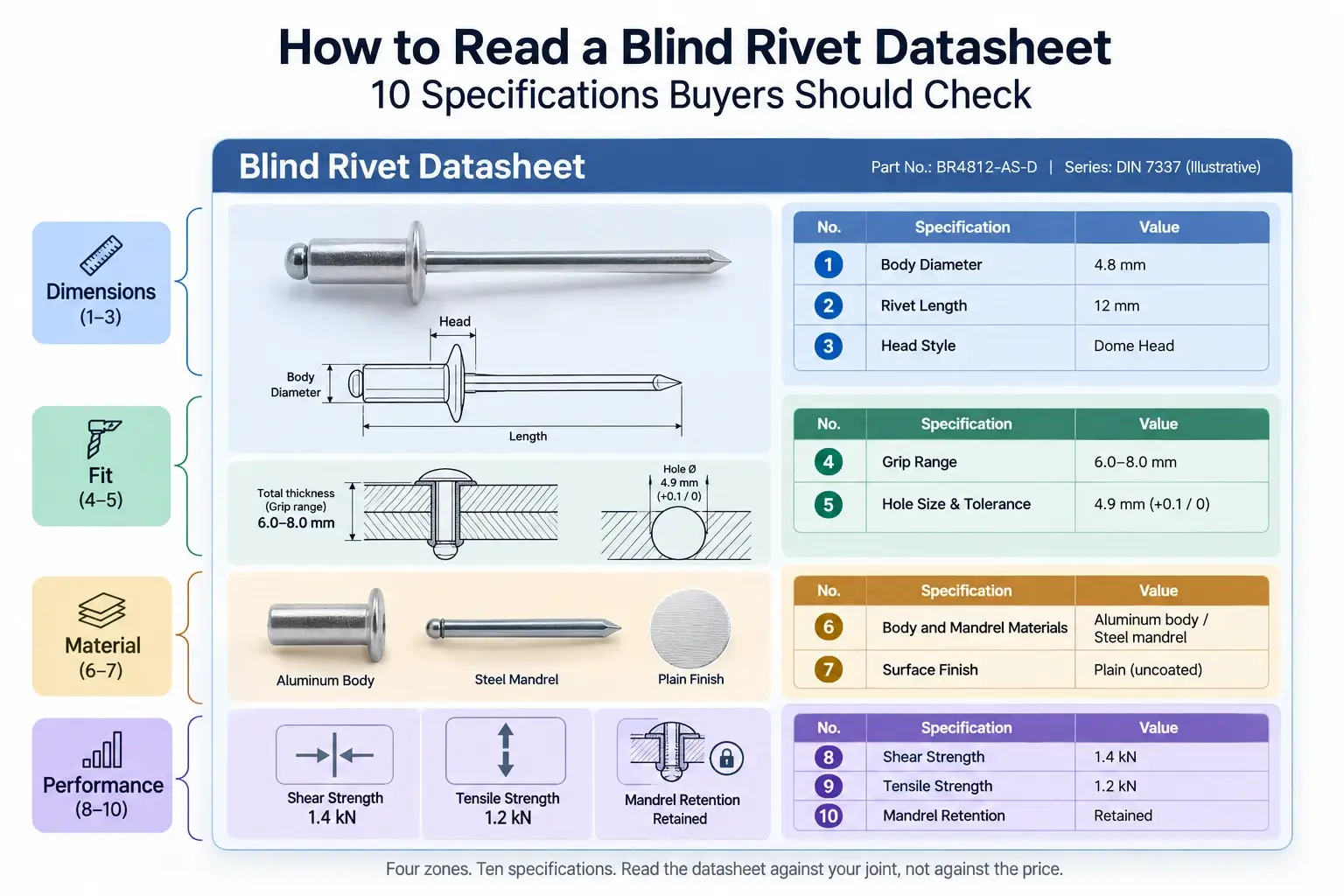
Step 3: Select Rivet Diameter and Hole Size
Refer to a standard rivet size chart to match diameter and hole size.
For installation details, see our guide on how to install blind rivets.
https://www.rivetfast.com/how-to-install-blind-rivets/
Blind Rivet Size Chart (Grip Range & Hole Size)
Blind Rivet Grip Range Chart
Grip ranges vary by diameter and rivet type. Always follow manufacturer specifications.
Recommended Hole Size Chart
Hole size must match rivet diameter for proper installation.
Not sure which rivet size fits your application? Contact our team for fast selection support.
https://www.rivetfast.com/contact-us/
Blind Rivet Grip Range vs Grip Length
Grip range refers to material thickness compatibility, while grip length refers to the rivet body length.
Grip range is the key factor for proper fastening performance.
How to Tell If a Rivet Grip Range Is Incorrect
Grip Range Too Short
Leads to insufficient expansion and weak joints.
Grip Range Too Long
Causes improper deformation and reduced holding force.
Common Installation Issues
Loose fastening
Rivet not setting properly
Material damage
How to Choose the Right Blind Rivet for Your Application
Material Selection
Choose from aluminum, steel, or stainless steel depending on strength and corrosion resistance.
Rivet Type
Different types serve different needs:
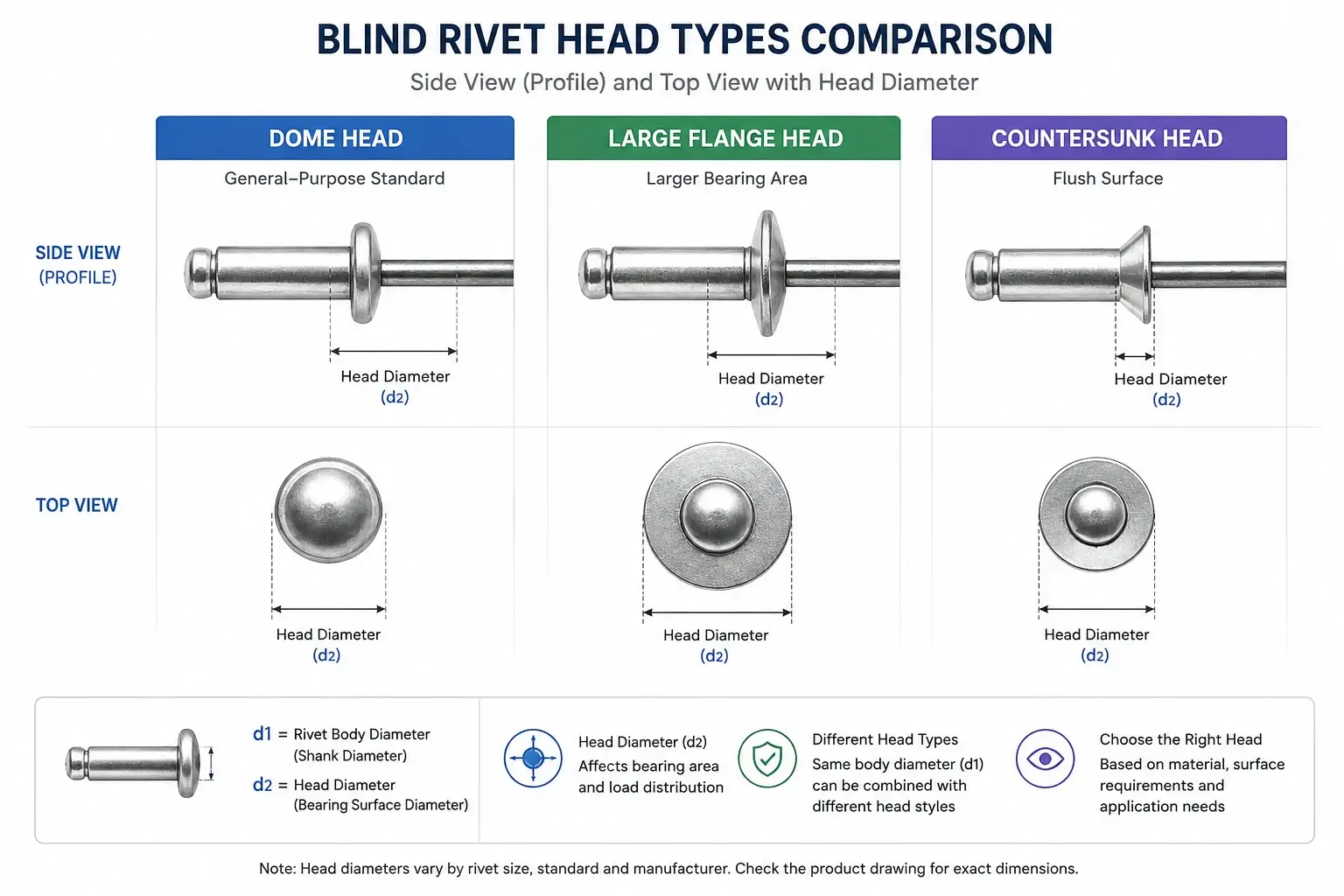
Explore more types of blind rivets for detailed comparison.
https://www.rivetfast.com/blind-rivets/
Environmental Considerations
Consider exposure to moisture, temperature, and chemicals.
Common Applications and Recommended Grip Ranges
Sheet Metal
Requires precise grip range to avoid deformation.
Automotive
Needs strong, vibration-resistant fastening.
HVAC
Often involves thin and layered materials.
Electrical Enclosures
Requires secure and clean fastening.
Construction
Demands durability and long-term performance.
Common Mistakes When Selecting Blind Rivets
Not measuring material thickness
Confusing grip range with rivet length
Using incorrect hole size
Ignoring material compatibility
Choosing the wrong rivet type
Expert Tips for Choosing the Correct Rivet Size
Always match grip range to actual thickness
Use multi-grip rivets when thickness varies
Test before mass production
Follow standard rivet size charts
Blind Rivet Grip Range FAQ
- How do I measure material thickness accurately?
Use a caliper or micrometer to measure each layer and add them together. - Is grip range more important than rivet length?
Yes, grip range determines whether the rivet will properly fasten the materials. - Can one blind rivet fit different material thicknesses?
Yes, multi-grip rivets are designed to accommodate a wider range of thicknesses. - What happens if the grip range is too short?
The rivet will not expand properly, resulting in a weak joint. - Can I use a rivet with a larger grip range?
It is not recommended, as it may reduce clamping force. - What is a multi-grip rivet?
A rivet designed to work across a broader range of material thicknesses.
Related Guides
Types of Blind Rivets https://www.rivetfast.com/blind-rivets/
How to Install Blind Rivets https://www.rivetfast.com/how-to-install-blind-rivets/
 Need Help Choosing the Right Blind Rivet?
 Need Help Choosing the Right Blind Rivet?
Choosing the correct blind rivet grip range is essential for performance and safety. Contact our team for expert advice, fast response, and customized fastening solutions.