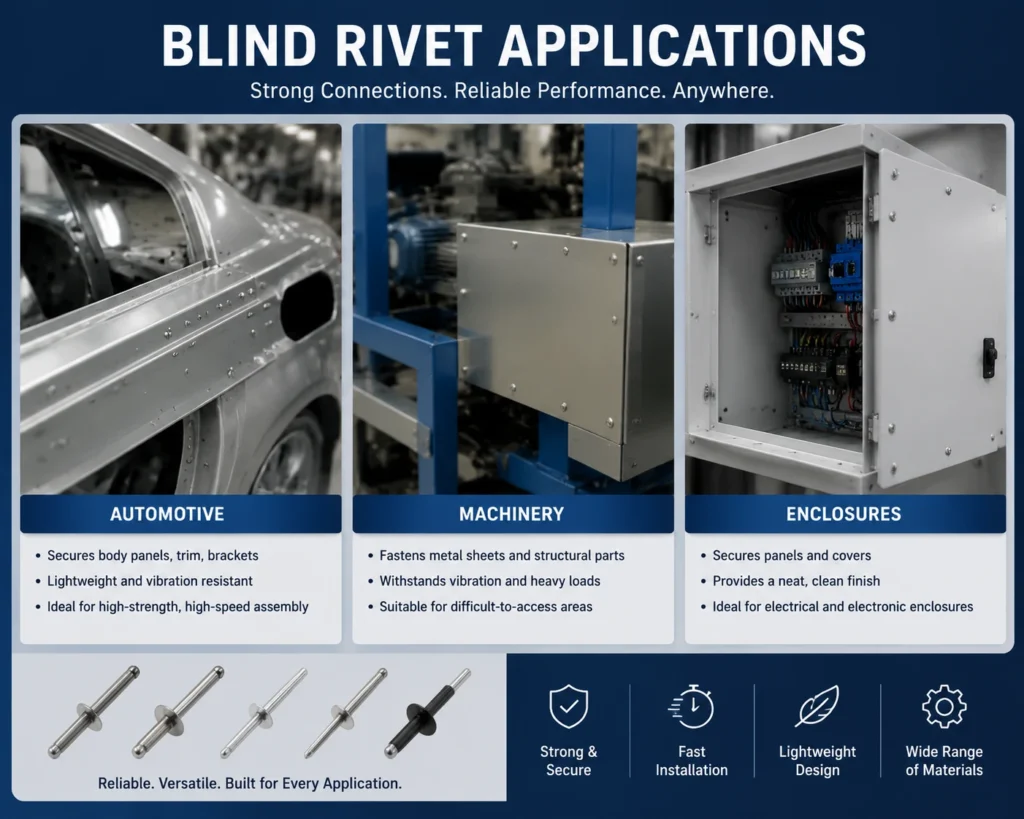
Introduction: Why Blind Rivets Are Widely Used in Industrial Manufacturing
In modern industrial manufacturing, the fastening solution you choose directly affects product reliability, production efficiency, and long-term performance.
Blind rivets have become one of the most widely used fastening solutions across industries because they allow one-side installation, deliver consistent fastening performance, and work effectively where access to the rear side of the assembly is limited.
From automotive components and electrical enclosures to HVAC systems and industrial machinery, blind rivets help manufacturers achieve fast, reliable, and cost-effective assembly.
Unlike traditional fasteners that may require access to both sides of a joint, blind rivets can be installed from a single side. This makes them especially suitable for:
Thin sheet metal assemblies.
Closed structures.
Industrial equipment panels.
Metal fabrication projects.
High-volume production environments.
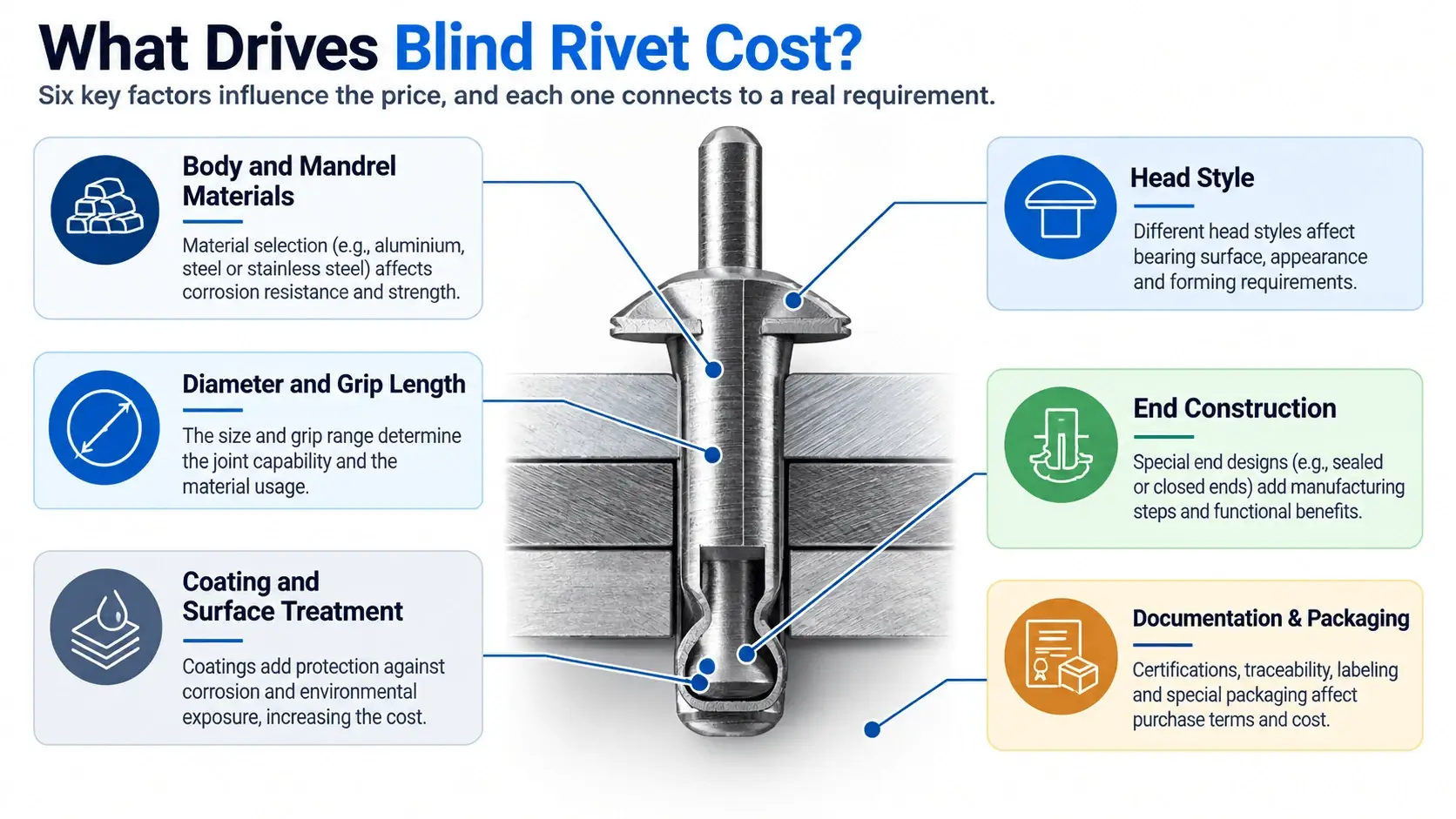
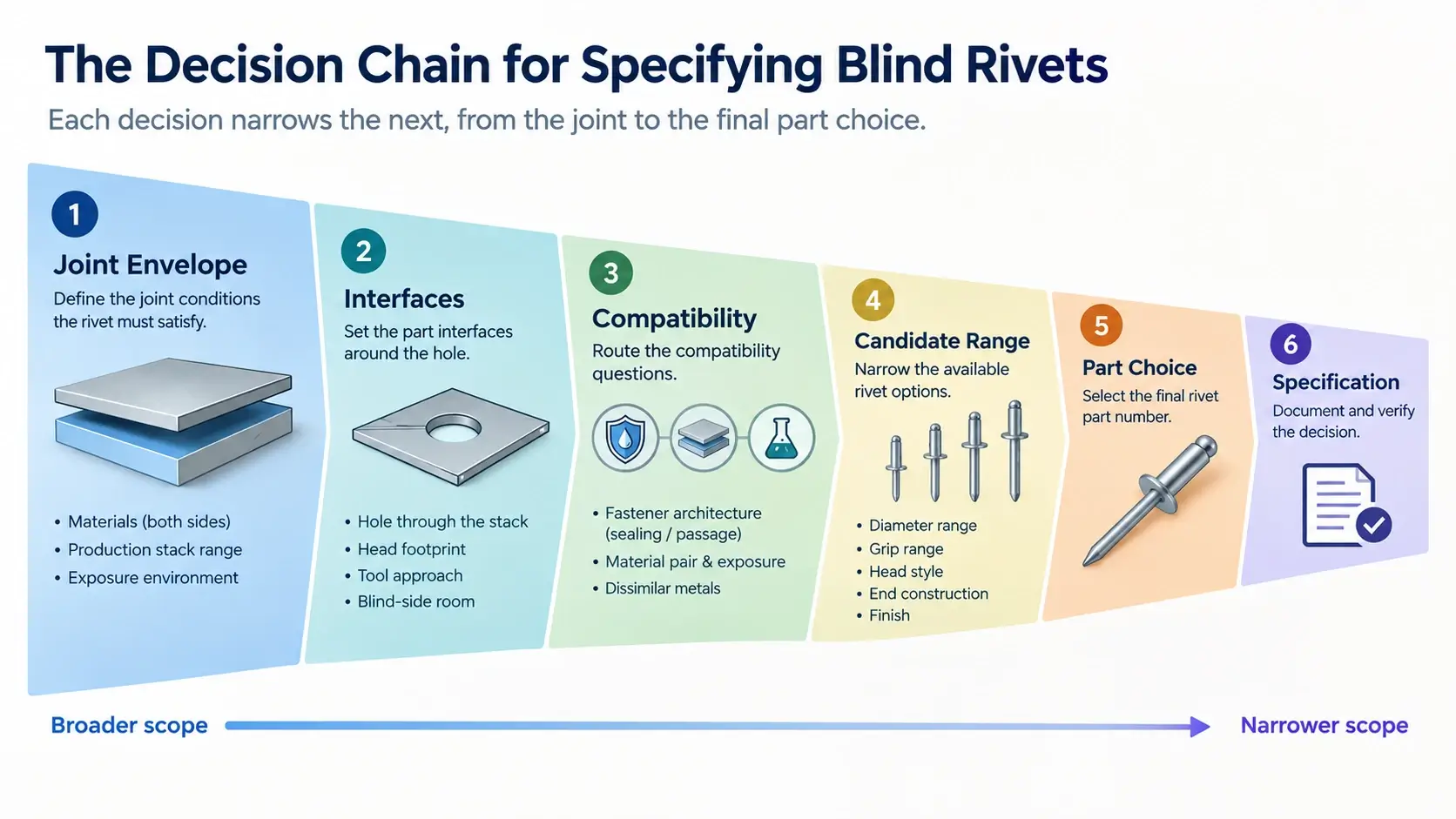
For industrial buyers, selecting the right blind rivet requires more than choosing a standard size. Material compatibility, load requirements, corrosion resistance, grip range, and production volume all influence final fastening performance.
As a professional blind rivet manufacturer, RivetFast provides standard and customized blind rivet solutions for OEM manufacturers, industrial distributors, and global buyers who need stable quality, reliable supply, and consistent batch performance.

Need reliable industrial blind rivets for your application?
RivetFast provides standard blind rivets and OEM customization solutions with stable production capacity, strict quality control, and global supply experience.
Request Engineering Support
Internal Link: What Is a Blind Rivet?
Internal Link: How to Install Blind Rivets
Why Industrial Manufacturers Use Blind Rivets for Assembly
Blind rivets are widely adopted in industrial applications because they combine installation efficiency with reliable mechanical performance.
One-Side Installation Improves Production Efficiency
One of the biggest advantages of blind rivets is their ability to create a strong joint when only one side of the assembly is accessible.
This feature is especially valuable for:
Enclosures.
Tubular structures.
Vehicle components.
Machinery covers.
Sheet metal assemblies.
For manufacturers producing large quantities of products, faster installation means reduced assembly time and improved production efficiency.
Compared with welding or threaded fasteners, blind rivets often require:
Less preparation time.
Simple installation tools.
Lower operator skill requirements.
Faster assembly cycles.
This makes blind rivets a practical solution for high-volume industrial production.
Reliable and Consistent Fastening Performance
Industrial manufacturers require fastening solutions that deliver stable performance across thousands or even millions of assemblies.
High-quality blind rivets provide:
Consistent tensile strength.
Reliable shear strength.
Stable clamping force.
Good vibration resistance.
For OEM production, consistency is critical. Variations in rivet dimensions, material properties, or manufacturing quality can lead to assembly problems and increased maintenance costs.
A reliable blind rivet supplier should provide strict quality control throughout the manufacturing process, including:
Dimensional inspection.
Tensile and shear testing.
Hardness testing.
Salt spray testing.
Material verification.
Suitable for Different Materials and Environments
Blind rivets are available in multiple materials to meet different application requirements.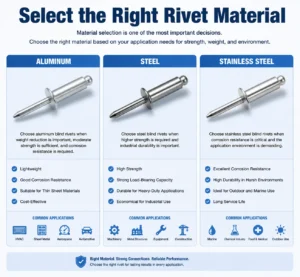
Aluminum Blind Rivets
Advantages: lightweight, good corrosion resistance, easy installation.
Typical applications: electronics, lightweight structures, general sheet metal assembly.
Steel Blind Rivets
Advantages: higher mechanical strength, suitable for demanding industrial applications.
Typical applications: machinery, industrial equipment, structural components.
Stainless Steel Blind Rivets
Advantages: excellent corrosion resistance, high strength performance.
Typical applications: outdoor equipment, food processing equipment, marine-related applications.
Material selection should consider:
Base material compatibility.
Operating environment.
Required strength.
Corrosion exposure.
Internal Link: How to Choose a Reliable Blind Rivet Manufacturer
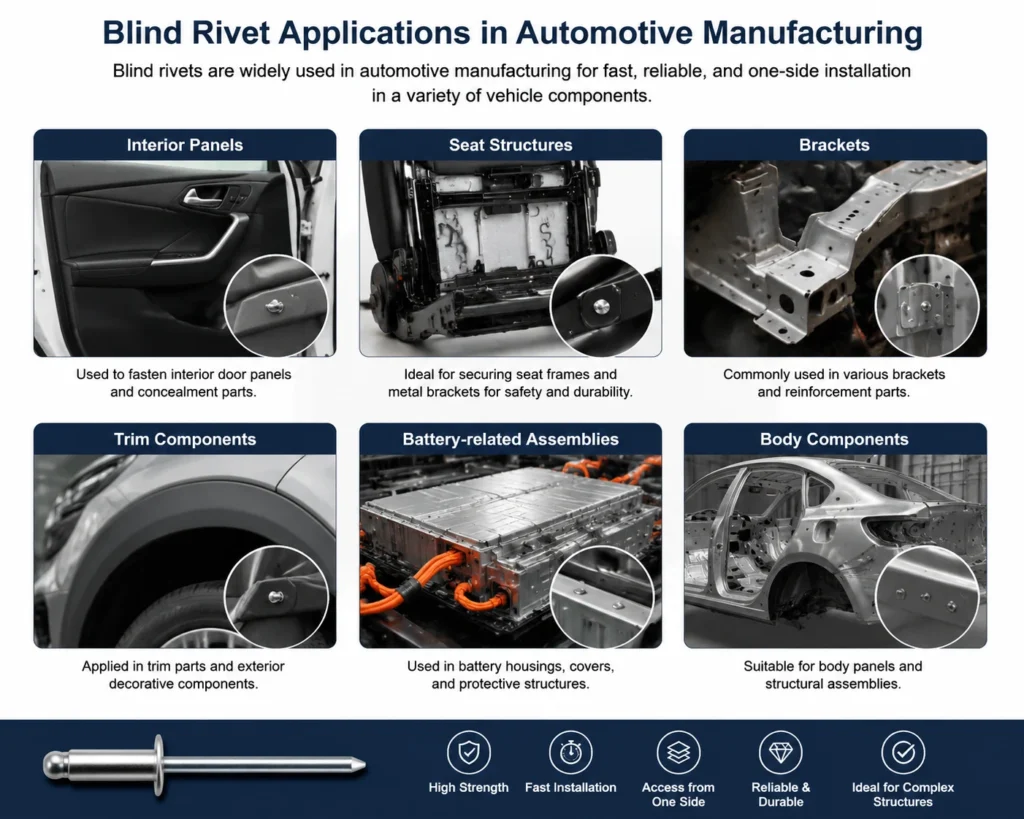
Blind Rivet Applications in Automotive Manufacturing
The automotive industry requires fastening solutions that provide strength, reliability, and efficient assembly.
Blind rivets are commonly used in automotive manufacturing because many vehicle components involve complex structures where access to both sides is limited.
Application Scenarios
Typical automotive applications include:
Interior panels.
Seat structures.
Brackets.
Trim components.
Battery-related assemblies.
Body components.

Common Challenges
Automotive manufacturers need fasteners that can handle vibration and mechanical stress. Vehicles operate under continuous vibration, so fasteners must maintain joint stability over long service periods.
Weight reduction is another major concern. Modern automotive design focuses on reducing vehicle weight, and lightweight aluminum blind rivets can help support that goal while maintaining sufficient fastening performance.
Production efficiency also matters because automotive lines require fast and repeatable assembly processes. Blind rivets support automated and high-volume manufacturing environments.
Recommended Blind Rivet Solutions for Automotive Applications
Depending on the application, manufacturers may choose:
Aluminum blind rivets for lightweight components, interior applications, and non-critical assemblies.
Steel blind rivets for higher strength requirements and structural components.
Structural blind rivets for applications requiring higher load capacity or exposure to vibration and mechanical stress.
When selecting automotive blind rivets, buyers should consider:
Rivet diameter.
Grip range.
Tensile strength.
Shear strength.
Material compatibility.
Need engineering support for automotive fastening projects?
RivetFast can help you select the right rivet material, size, and grip range for your components.
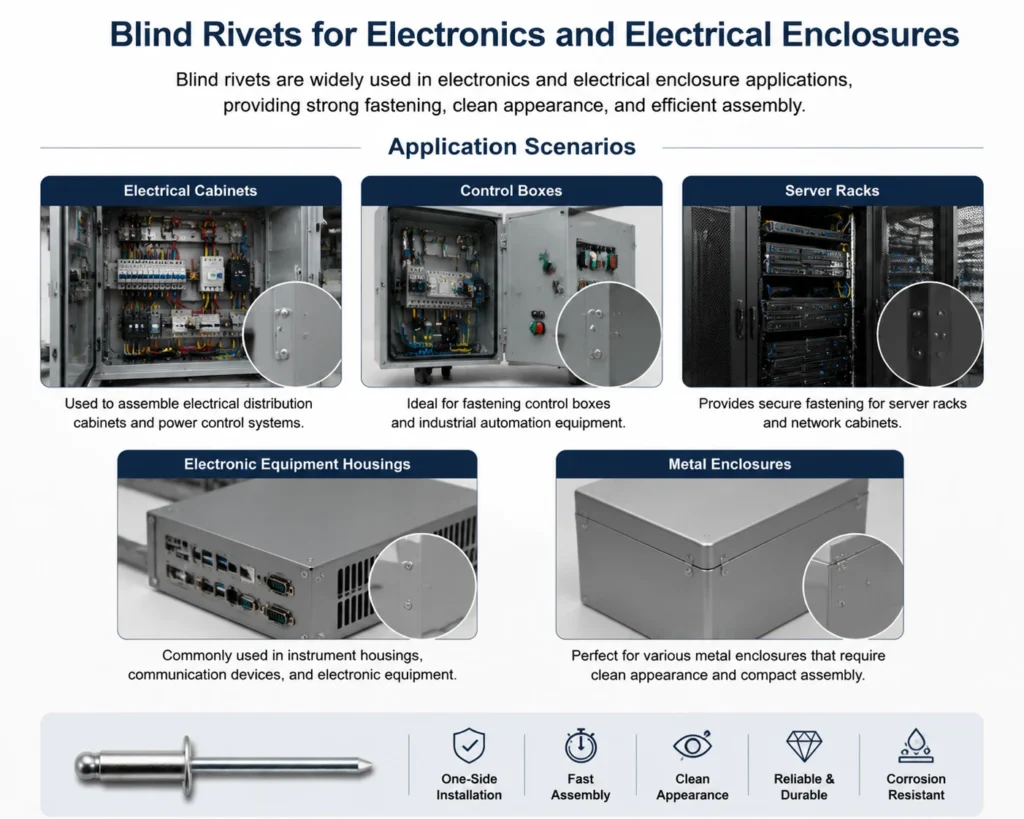
Blind Rivets for Electronics and Electrical Enclosures
Electrical and electronic equipment manufacturers frequently use blind rivets for assembling metal enclosures, cabinets, and control systems.
Because many electronic products require a clean appearance and compact structure, blind rivets provide an efficient alternative to traditional fastening methods.
Application Scenarios
Common applications include:
Electrical cabinets.
Control boxes.
Server racks.
Electronic equipment housings.
Metal enclosures.
Common Challenges
Thin sheet metal assembly is a major issue in electronic enclosure production. The selected rivet must provide sufficient holding strength without damaging the material.
Appearance requirements are also important because visible fasteners should maintain a clean and professional look. Head style selection and installation consistency matter here.
Corrosion protection is another consideration because electronic equipment may operate in environments where moisture resistance is required.
Recommended Blind Rivet Solutions for Electronics Applications
For electronic equipment and electrical enclosure manufacturing, commonly selected blind rivet solutions include:
Aluminum blind rivets for lightweight enclosures, control cabinets, and electronic housings. Advantages: low weight, good corrosion resistance, easy installation.
Stainless steel blind rivets for outdoor electrical equipment or applications exposed to humidity. Advantages: excellent corrosion resistance and long service life.
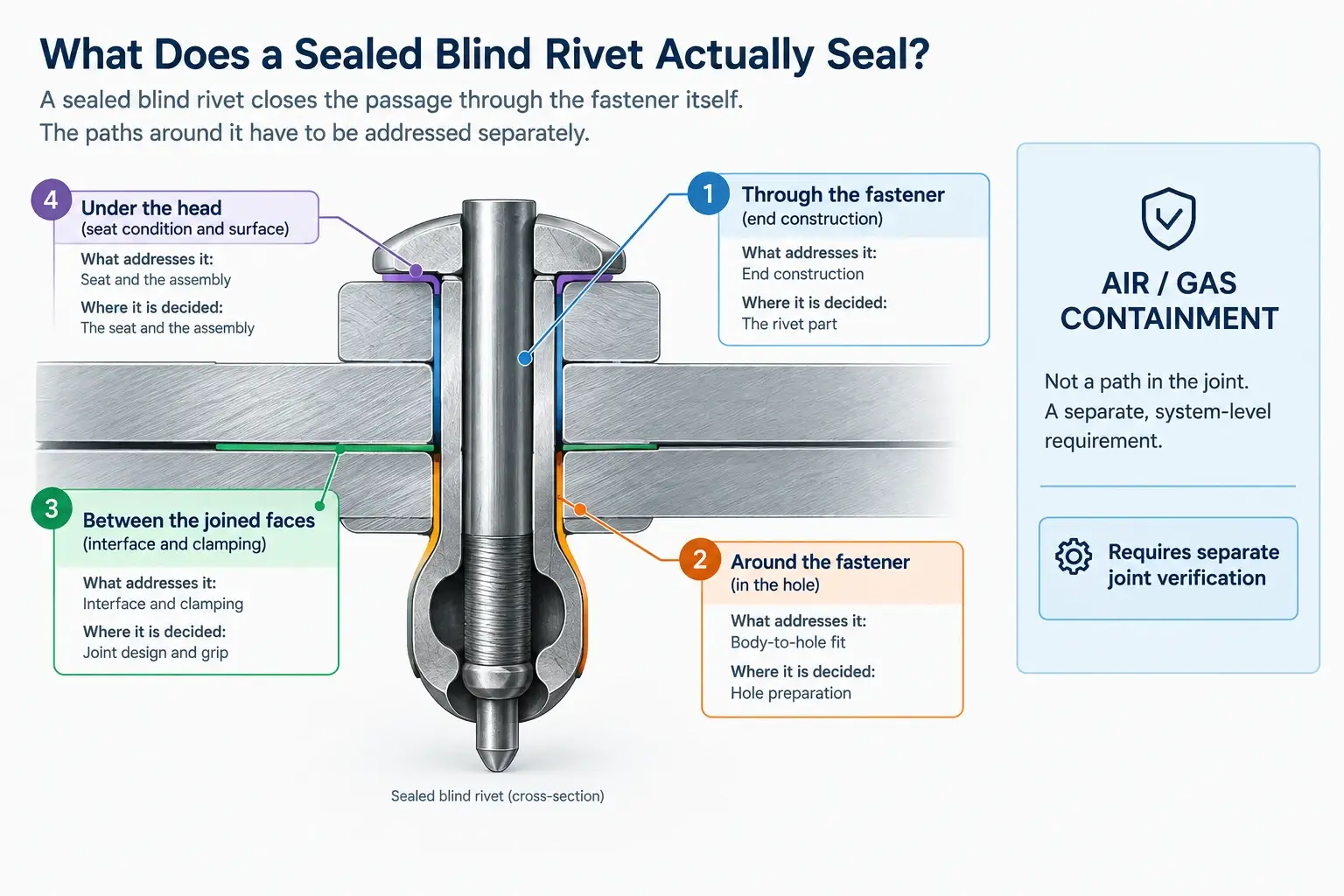
Closed-end blind rivets for applications requiring reduced air and moisture penetration, better sealing performance, and improved appearance.
When selecting blind rivets for electronic applications, manufacturers should evaluate:
Panel thickness.
Grip range requirements.
Environmental conditions.
Required appearance standards.
Internal Link: Blind Rivet Grip Range Explained
Blind Rivets for HVAC Systems and Sheet Metal Fabrication
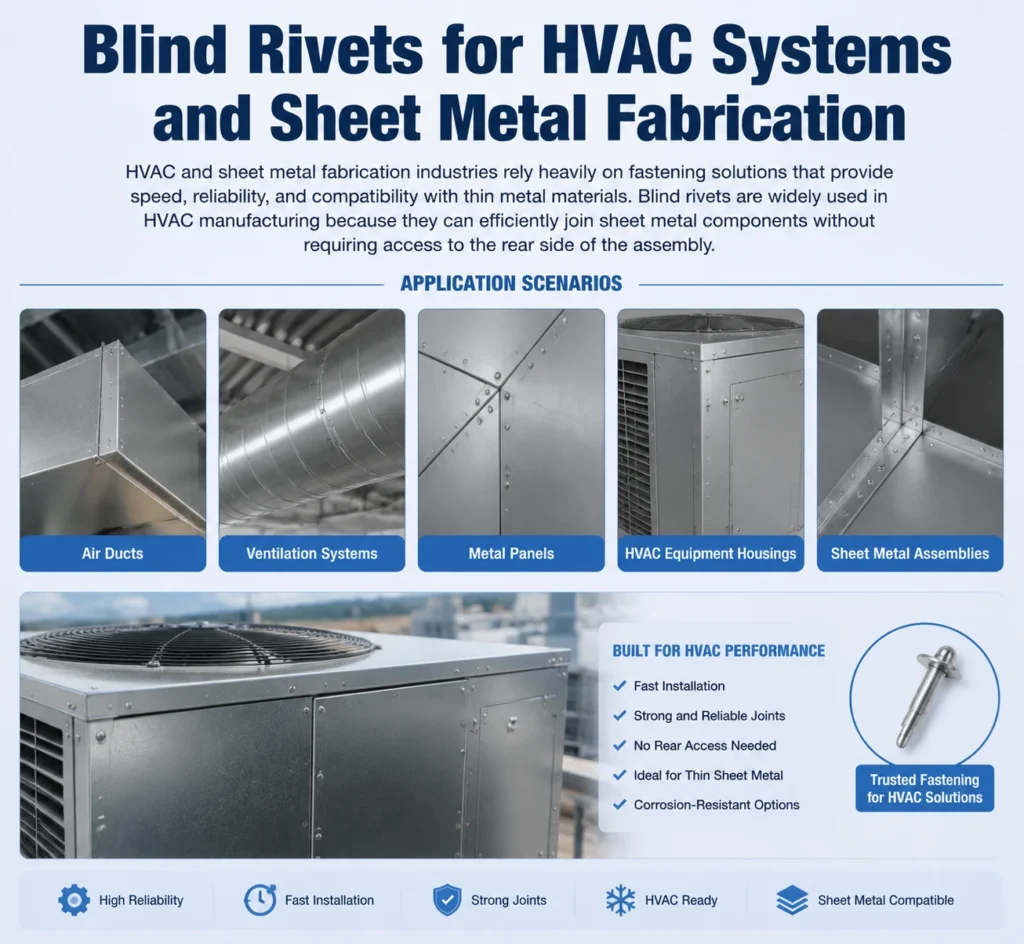
HVAC and sheet metal fabrication industries rely heavily on fastening solutions that provide speed, reliability, and compatibility with thin metal materials.
Blind rivets are widely used in HVAC manufacturing because they can efficiently join sheet metal components without requiring access to the rear side of the assembly.
Application Scenarios
Common HVAC applications include:
Air ducts.
Ventilation systems.
Metal panels.
HVAC equipment housings.
Sheet metal assemblies.

Common Challenges
Fast assembly of large components is a key requirement. HVAC production often involves a high number of sheet metal connections, so manufacturers need fasteners that reduce installation time and simplify assembly processes.
Thin sheet metal joining is another issue. The correct blind rivet should provide secure clamping force, proper grip range, and minimal material deformation.
Environmental exposure also matters because HVAC equipment may operate in conditions affected by moisture, temperature changes, or outdoor weather.
Recommended Blind Rivet Solutions for HVAC Applications
Common choices include:
Aluminum blind rivets for general HVAC sheet metal assembly and lightweight applications.
Steel blind rivets for higher strength requirements and heavy-duty equipment.
Coated blind rivets for improved corrosion protection in specific environmental conditions.
For HVAC applications, buyers should carefully match:
Rivet diameter.
Grip range.
Sheet thickness.
Base material compatibility.
Blind Rivets for Industrial Machinery and Equipment
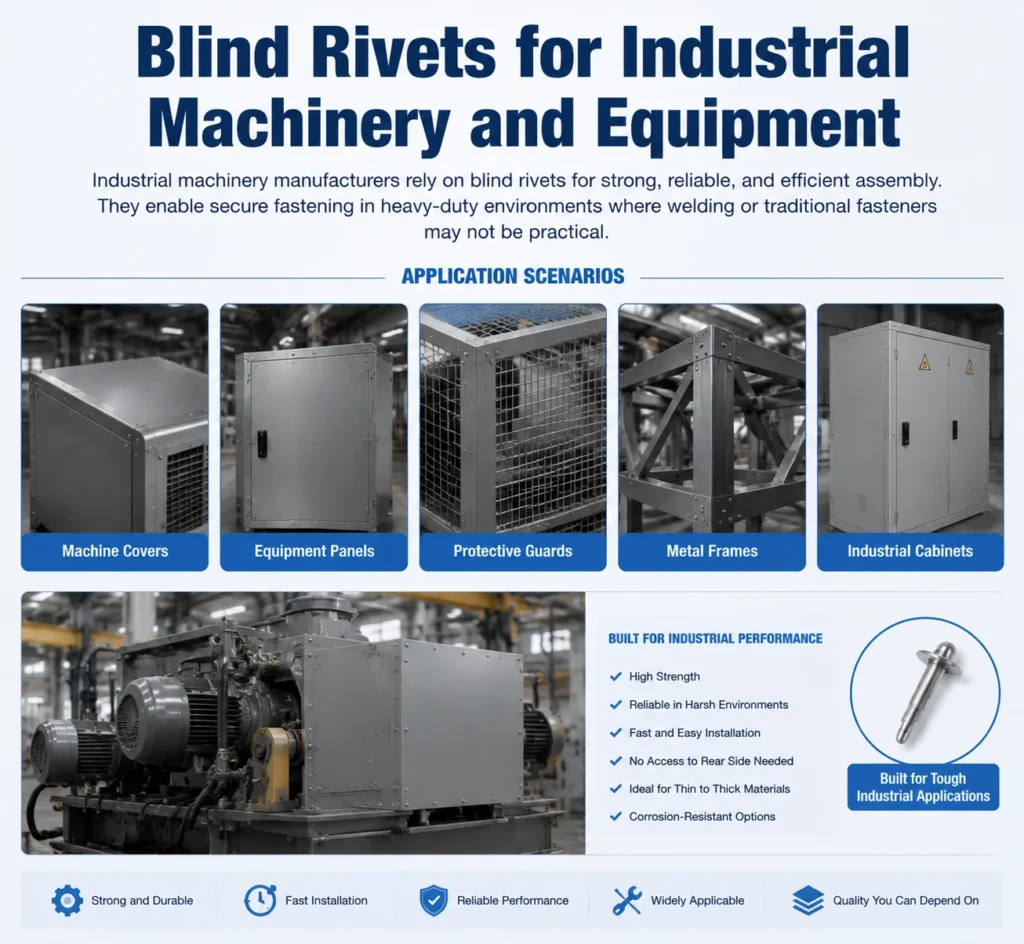
Industrial machinery manufacturers often require fastening solutions that provide durability, reliability, and efficient assembly.
Blind rivets are commonly used in machinery structures where welding or traditional fasteners may not be practical.
Application Scenarios
Typical applications include:
Machine covers.
Equipment panels.
Protective guards.
Metal frames.
Industrial cabinets.
Common Challenges
Mechanical stress and vibration are constant concerns in industrial equipment. Fasteners must maintain joint integrity during long-term operation.
Production efficiency also matters because manufacturers need fastening methods that support faster assembly, lower labor costs, and repeatable installation quality.
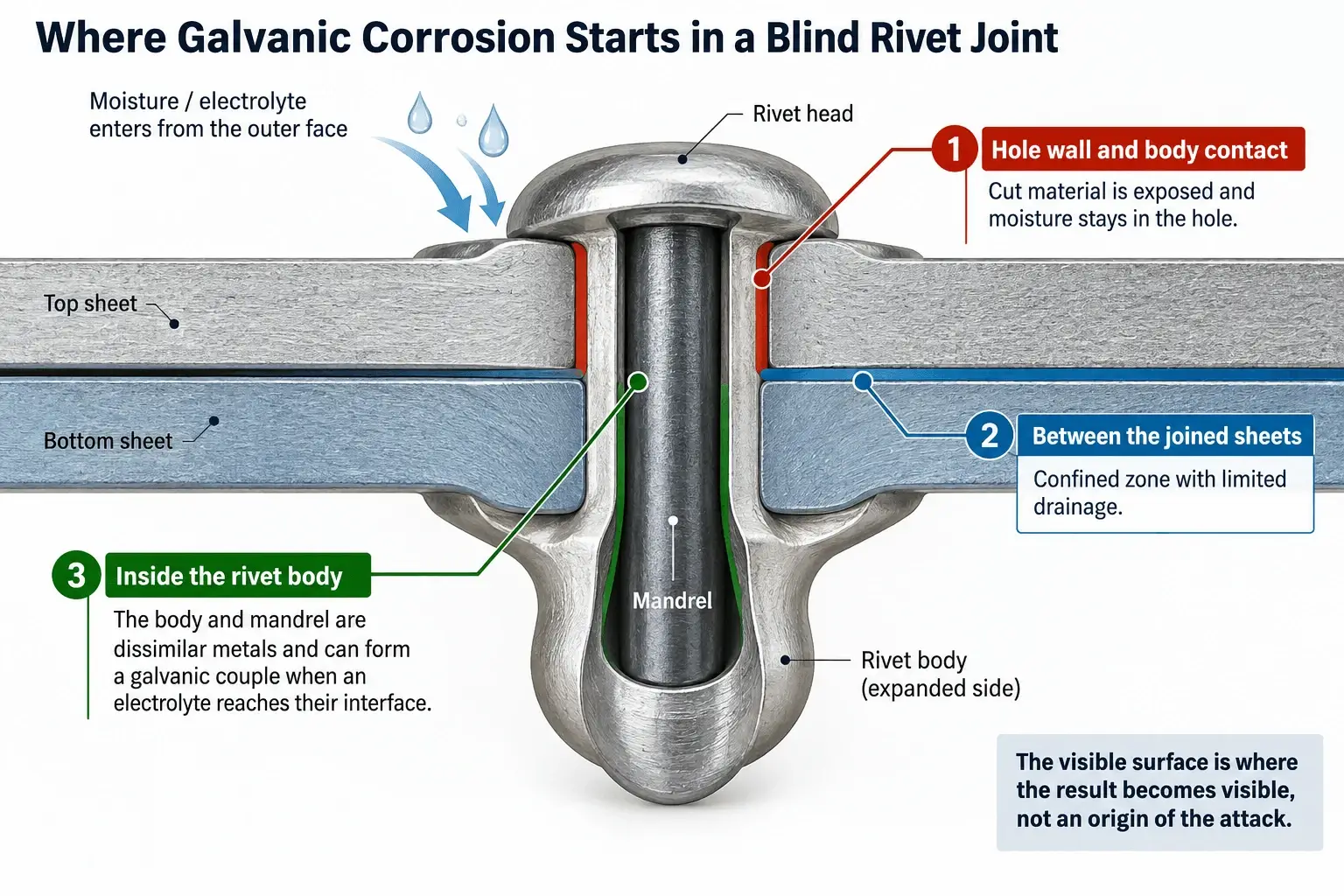
Different material combinations can create additional challenges. Industrial equipment may combine steel panels, aluminum components, and coated materials, so selecting the correct rivet material helps avoid corrosion issues and joint failure.
Recommended Blind Rivet Solutions for Machinery Applications
Depending on performance requirements:
Steel blind rivets for heavy-duty machinery and higher strength assemblies.
Stainless steel blind rivets for harsh environments and outdoor equipment.
Structural blind rivets for high-load applications and critical fastening points.
How to Choose the Right Blind Rivet for Industrial Applications
Choosing the correct blind rivet requires evaluating several key factors.
A suitable rivet should provide the right balance between strength, material compatibility, installation efficiency, cost effectiveness, and service life.
Select the Right Rivet Material
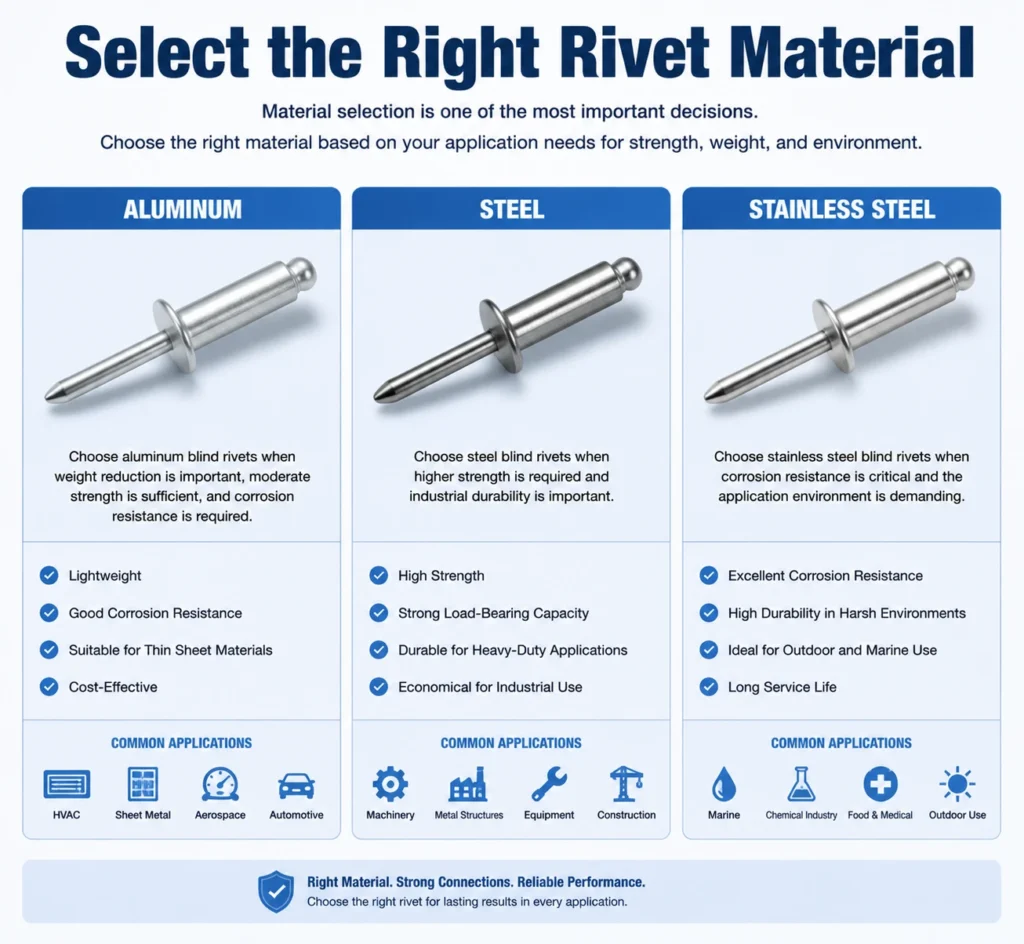
Material selection is one of the most important decisions.
Aluminum
Choose aluminum blind rivets when weight reduction is important, moderate strength is sufficient, and corrosion resistance is required.
Steel
Choose steel blind rivets when higher strength is required and industrial durability is important.
Stainless Steel
Choose stainless steel blind rivets when corrosion resistance is critical and the application environment is demanding.
Select the Correct Rivet Diameter
Rivet diameter affects load capacity, joint strength, and installation requirements.
Common industrial blind rivet diameters include:
The correct diameter depends on:
Material thickness.
Required strength.
Hole size.
Application conditions.
Match the Grip Range Correctly
Grip range refers to the total thickness of materials being joined.
Choosing the wrong grip range may cause:
Loose fastening.
Incomplete rivet formation.
Reduced joint strength.
Before ordering, buyers should confirm:
Total material thickness.
Required grip range.
Rivet length compatibility.
Internal Link: Blind Rivet Grip Range Explained: How to Choose the Right Size
Consider Operating Environment
Environmental factors influence rivet selection.
Consider:
Moisture exposure.
Temperature variation.
Chemical exposure.
Outdoor conditions.
Need help selecting the right blind rivet?
RivetFast provides engineering support for rivet size selection, material recommendations, custom specifications, and OEM production requirements.
Why Choose RivetFast as Your Industrial Blind Rivet Manufacturer?
Selecting the right supplier is just as important as selecting the right rivet.
For industrial buyers, a reliable manufacturer should provide stable production capacity, strict quality control, and OEM customization support.
Stable Production Capacity
Large-volume projects require consistent supply capability.
RivetFast supports bulk orders with advanced production equipment, strong manufacturing capacity, and stable batch quality.
Strict Quality Control
Reliable fastening performance starts with quality inspection.
Our quality control process includes:
Tensile and shear strength testing.
Hardness testing.
Salt spray testing.
Material verification.
Dimensional inspection.
OEM and Customization Support
Different applications may require customized solutions.
RivetFast supports:
Custom dimensions.
Special materials.
Surface treatments.
Packaging requirements.
Drawing-based development.
Whether you need standard industrial blind rivets or customized fastening solutions, working with an experienced manufacturer helps reduce supply risks and improve assembly reliability.
Internal Link: Blind Rivets
FAQ
1.What are blind rivets commonly used for?
Blind rivets are commonly used for joining sheet metal, automotive components, electrical enclosures, HVAC systems, industrial machinery, and other applications where access to only one side of the assembly is available.
2.Why are blind rivets preferred in industrial applications?
Blind rivets are preferred because they offer fast installation, reliable fastening performance, reduced assembly complexity, and suitability for high-volume manufacturing.
3.Which blind rivet material is best for industrial applications?
The best material depends on the application requirements. Aluminum blind rivets are suitable for lightweight applications, steel rivets provide higher strength, and stainless steel rivets offer superior corrosion resistance.
4.Can blind rivets be used for thin sheet metal?
Yes. Blind rivets are widely used for thin sheet metal assemblies. However, the correct diameter, grip range, and material should be selected to ensure reliable fastening performance.
5.How do I choose the right blind rivet size?
The correct blind rivet size depends on material thickness, hole diameter, grip range, required strength, and application environment.
6.Can a blind rivet manufacturer provide OEM customization?
Yes. Professional blind rivet manufacturers can provide OEM services including custom dimensions, materials, finishes, packaging, and production according to customer drawings.
Not sure which rivet type fits your project?
Contact us with your sheet thickness, material, and environment, and we’ll help you select the right option.