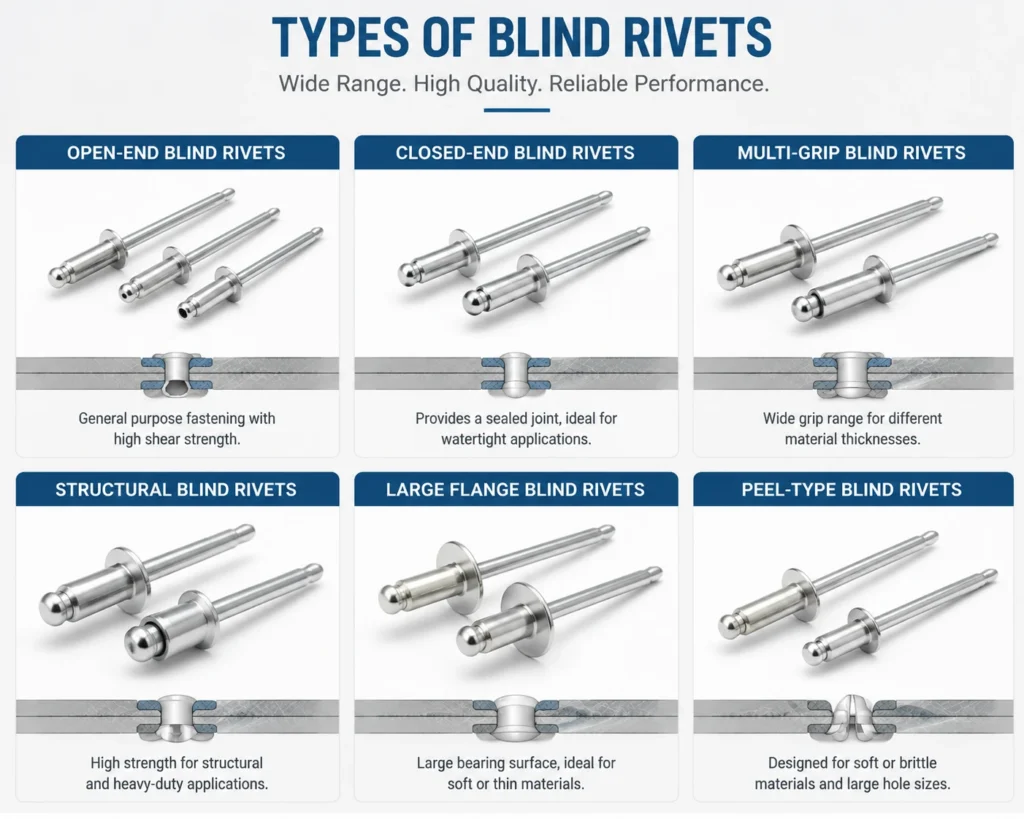
In industries such as automotive manufacturing, construction, electronics, and sheet metal fabrication, joining materials quickly and securely is critical. Traditional fastening methods often require access to both sides of the workpiece, which is not always possible.
This is where blind rivets become an efficient and reliable fastening solution.
Blind rivets are widely used because they allow installation from only one side of the material while maintaining strong and durable connections. Whether used in automotive body panels, metal enclosures, HVAC systems, or furniture assembly, blind rivets help improve productivity while reducing assembly complexity.
So what are blind rivets, how do they work, and how can you choose the right type?
In this guide, we will cover everything you need to know.
What Are Blind Rivets?
Blind rivets, also called pop rivets, are permanent mechanical fasteners designed for situations where only one side of the workpiece is accessible.
A blind rivet consists of: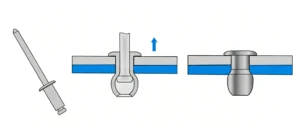
- Rivet body
- Mandrel
- Head
During installation, the mandrel is pulled by a rivet tool, causing the rivet body to expand and clamp materials together securely.
Compared with bolts and screws, blind rivets provide:
✓ Faster installation
✓ Strong vibration resistance
✓ Lower labor costs
✓ Reliable long-term fastening
Their simple installation process makes them widely used across industrial applications.
Suggested image:
Blind rivet structure diagram
How Do Blind Rivets Work?
Blind rivets are designed to create secure fastening from one side only.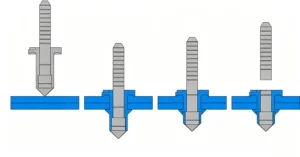
The installation process typically includes four steps:
Step 1: Drill and insert
Drill a hole according to rivet specifications and insert the rivet.
Step 2: Pull the mandrel
Use a manual or pneumatic rivet gun to pull the mandrel.
Step 3: Rivet body expands
The rivet body expands behind the material.
Step 4: Mandrel breaks
Once the required force is reached, the mandrel snaps and installation is complete.
For production lines exceeding 500 installations per day, pneumatic rivet tools can improve assembly efficiency by up to 60%.
Types of Blind Rivets
Different applications require different blind rivet types.
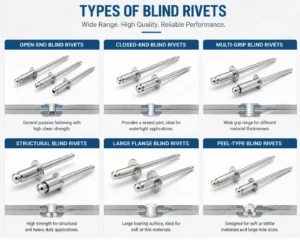
Open-End Blind Rivets
Most common type.
Applications:
- sheet metal
- electronics
- appliances
Advantages:
- economical
- easy installation
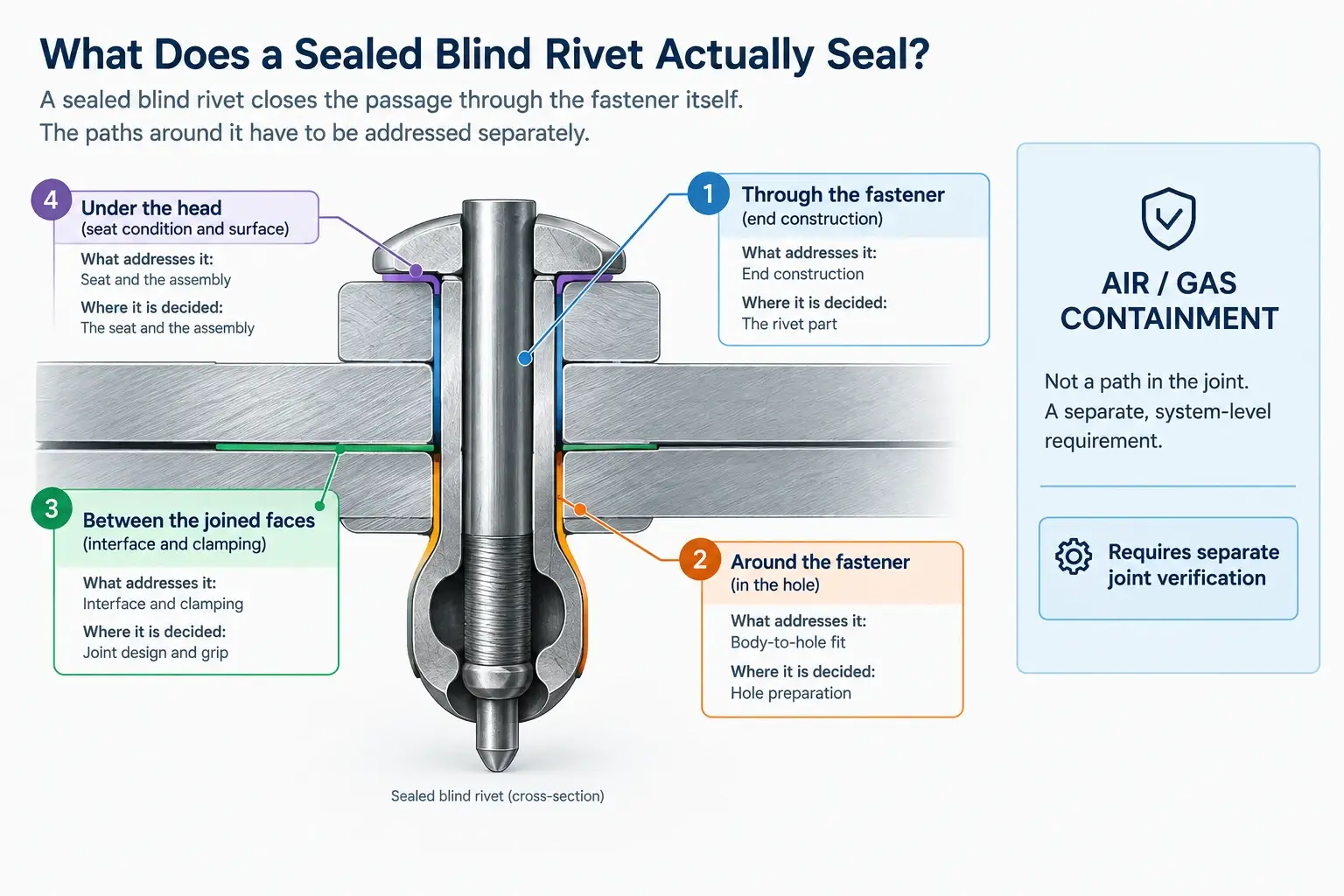
Closed-End Blind Rivets
Designed for sealed applications.
Applications:
- automotive batteries
- waterproof enclosures
Advantages:
- prevents moisture leakage
- improved sealing
Multi-Grip Blind Rivets
Suitable for varying material thicknesses.
Applications:
- HVAC
- mixed-material assemblies
Advantages:
- fewer inventory requirements
Structural Blind Rivets
Designed for high-load applications.
Applications:
- transportation
- construction
- trailers
Advantages:
- high tensile strength
- excellent vibration resistance
Peel Type Blind Rivets
Designed for soft materials.
Applications:
- plastics
- insulation materials
- fiberglass
Advantages:
- larger backside load distribution
Internal links: Blind Rivets Product Page
Blind Rivet Material Comparison
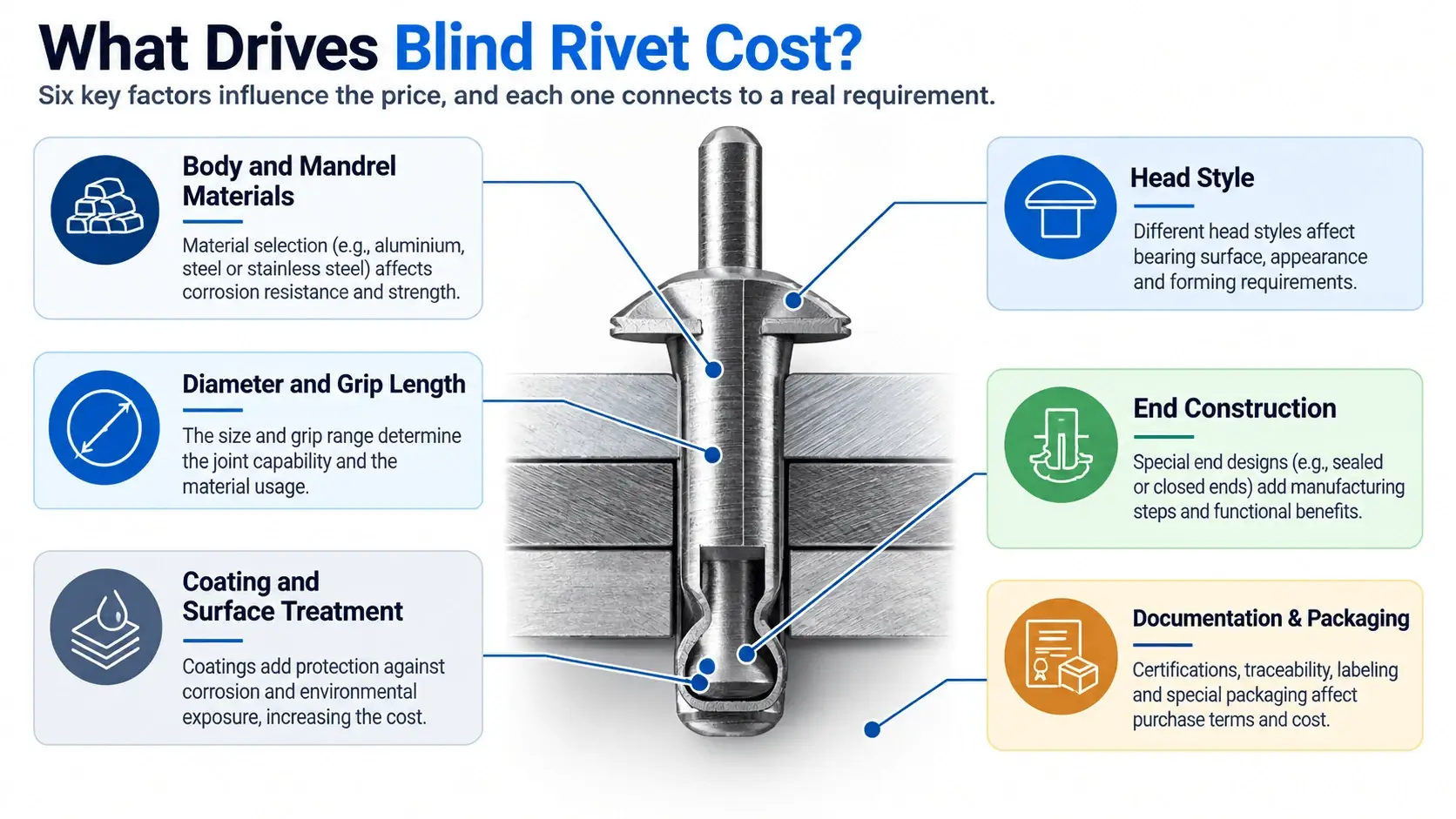
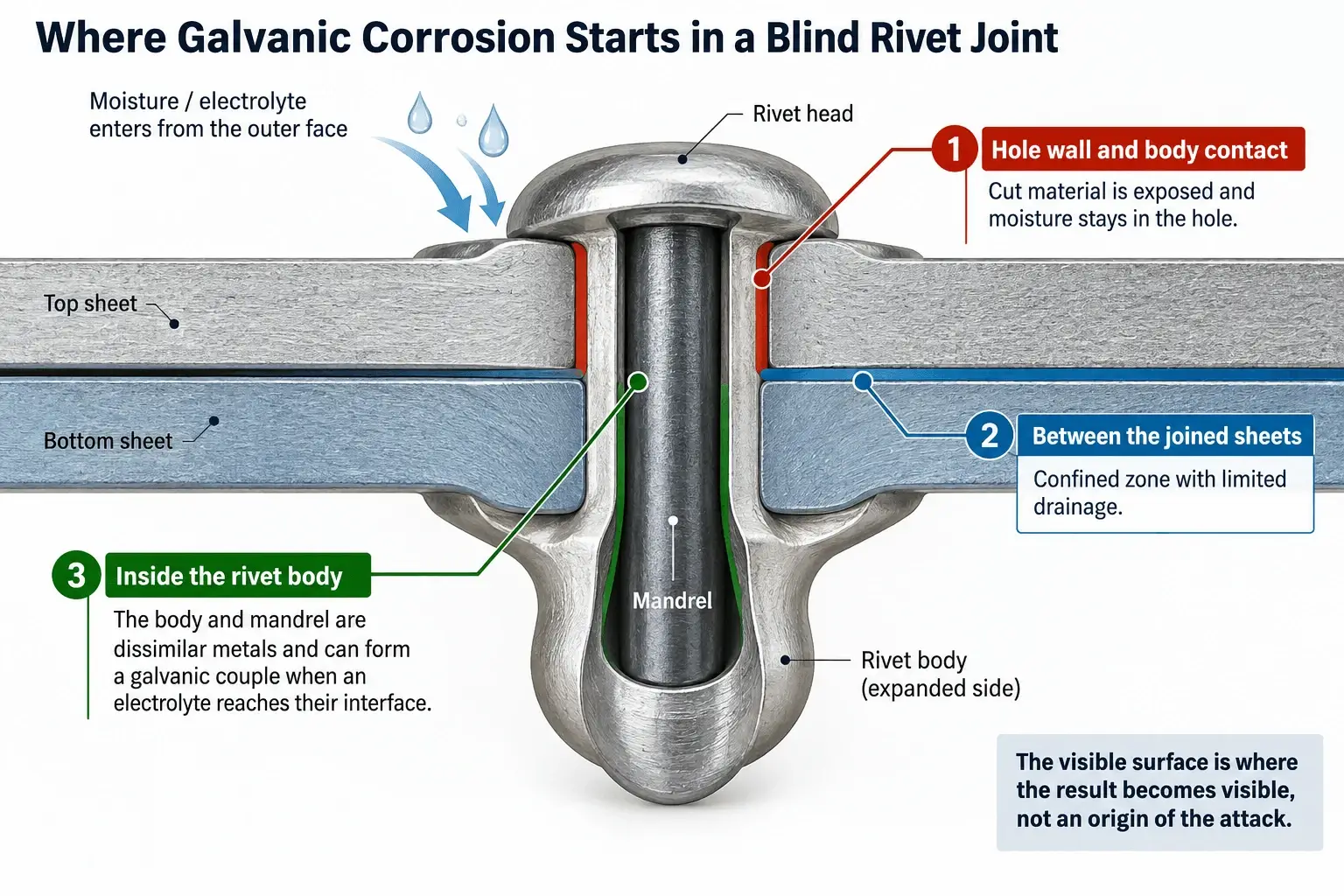
Different rivet materials significantly affect strength and corrosion resistance.
| Material | Diameter | Tensile Strength | Shear Strength | Salt Spray Resistance | Applications |
|---|---|---|---|---|---|
| Aluminum | 2.4–6.4mm | 800–1200N | 450–700N | 150h | Lightweight equipment |
| Carbon Steel | 2.4–6.4mm | 1300–1800N | 800–1100N | 48h | General machinery |
| 304 Stainless Steel | 2.4–6.4mm | 1600–2200N | 1000–1400N | 500h | Outdoor applications |
Selection recommendations:
High vibration → ≥1500N rivets
Outdoor humidity → stainless steel rivets
Mass production → single-side installation rivets
Common Applications of Blind Rivets
Blind rivets are used across many industries.
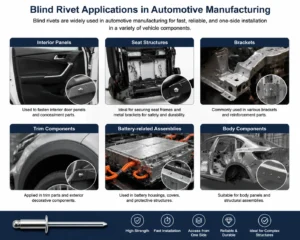
Automotive Manufacturing
Pain point:
High vibration environments may loosen fasteners.
Solution:
Use high-strength rivets with tensile values exceeding 1500N.
 Electronics
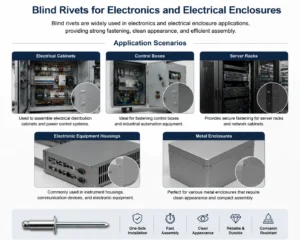
Pain point:
Heat sink vibration causes instability.
Solution:
Single-side rivet installation improves assembly speed.
Construction
Pain point:
Outdoor structures face moisture and corrosion.
Solution:
Use 304 stainless steel rivets.
Furniture Manufacturing
Pain point:
Assembly line production requires fast installation.
Solution:
Blind rivets reduce assembly time significantly.
How to Choose the Right Blind Rivet
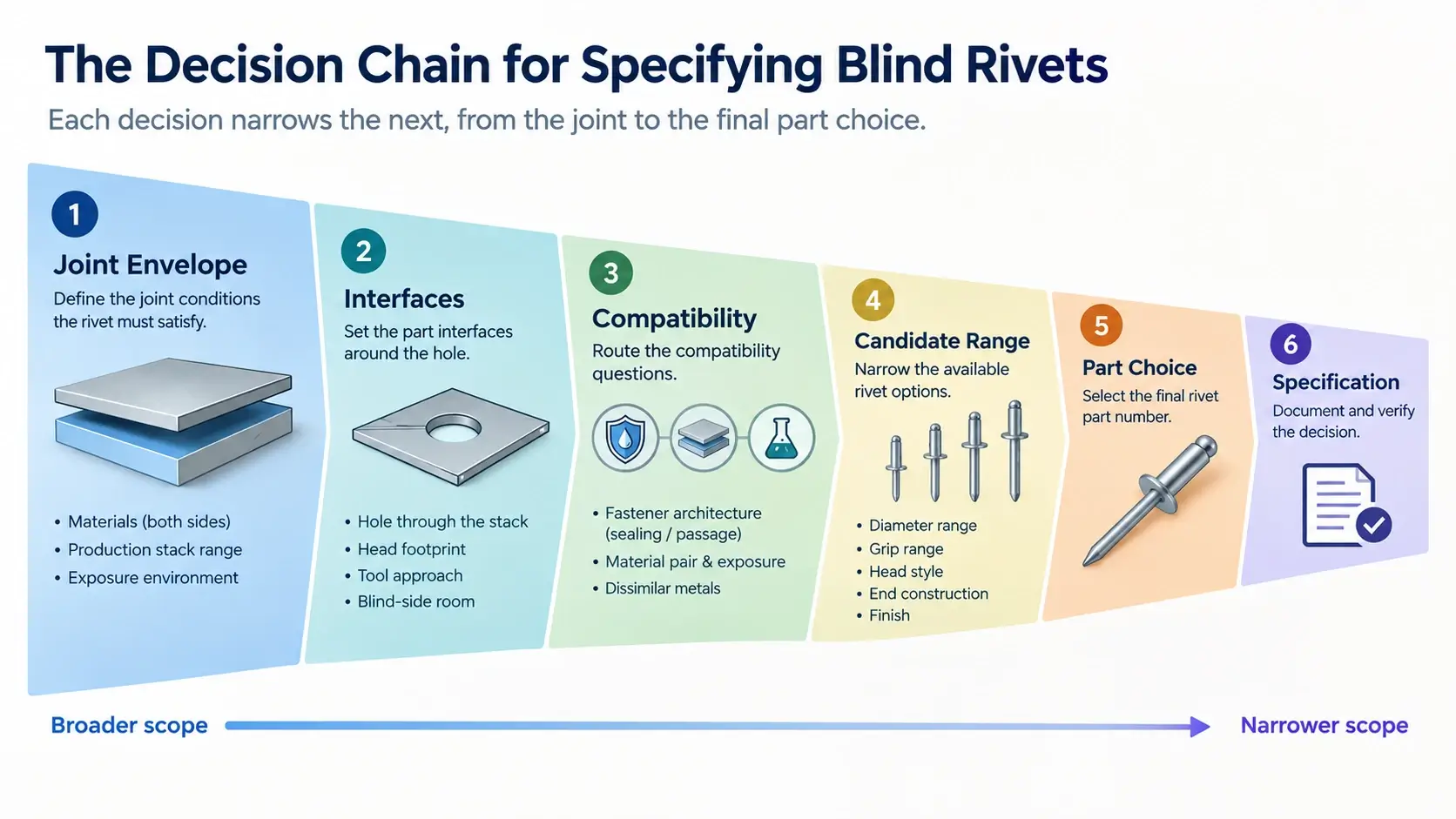
Before purchasing blind rivets, evaluate:
Material
- Aluminum
- Steel
- Stainless steel
Grip Range
Choose rivets matching material thickness.
Hole Diameter
Oversized holes reduce holding strength.
Environment
Outdoor environments require corrosion resistance.
Strength Requirement
Vibration applications require structural rivets.
Example:
Outdoor cabinet + humidity + vibration
Recommended:
304 stainless structural blind rivets
Common Blind Rivet Selection Mistakes
Avoid these common mistakes:
Ignoring grip range
Causes weak fastening.
Choosing wrong material
Results in corrosion.
Selecting insufficient tensile strength
Leads to loosening.
Ignoring environment conditions
Shortens service life.
FAQ
Are blind rivets permanent?
Yes. Blind rivets create permanent joints.
Are blind rivets stronger than screws?
In vibration conditions, blind rivets often provide more reliable fastening.
Can blind rivets be removed?
Yes, by drilling through the rivet head.
What materials can blind rivets join?
Metal sheets, plastics, fiberglass, and composite materials.
What size blind rivet do I need?
Choose according to material thickness and hole size.
Conclusion
Blind rivets have become one of the most efficient fastening solutions in industrial manufacturing because of their easy installation, strong vibration resistance, and ability to install from one side only.
Choosing the right material, structure, and strength level can significantly improve production reliability while reducing assembly costs.
 Need help selecting the right blind rivet?
 Need help selecting the right blind rivet?
Request free samples or contact our engineering team for customized solutions.
Contact Us
Internal links: