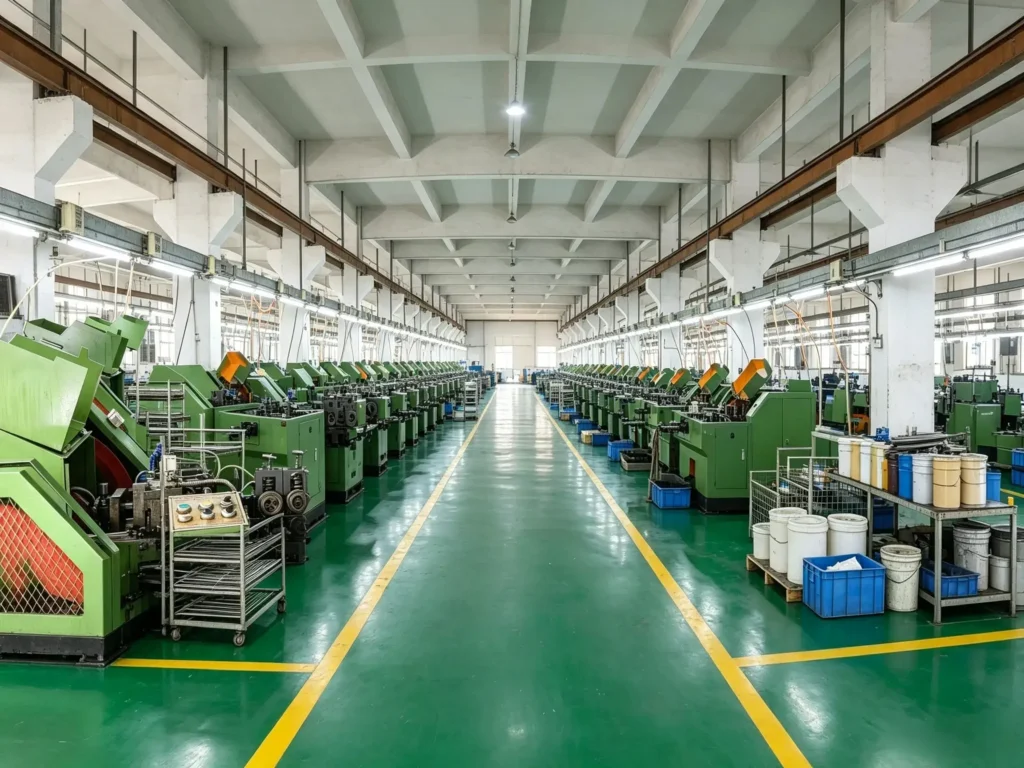
A supplier may provide a competitive quotation and attractive samples, but that does not always mean they can support 500,000 or 1 million pieces per month with consistent quality.When you’re sourcing industrial fasteners at scale — whether for distributor inventory, an OEM production line, or container-quantity shipments — the supplier’s actual production capacity determines whether your project stays on schedule or grinds to a halt.
The most common risks buyers face when a manufacturer lacks real production capacity include:
- Insufficient monthly output that cannot meet your order volume
- Delivery delays that stall downstream assembly lines
- Quality inconsistency between batches when production is rushed or outsourced
- Lack of OEM support when custom specifications are needed mid-project
Before placing a large order, buyers should evaluate a blind rivet manufacturer’s real production capability through factory verification, equipment review, quality systems assessment, and delivery record analysis. This guide provides a practical framework — covering 8 key verification factors, 4 hands-on methods, and a complete evaluation checklist — to help industrial buyers, distributors, and OEM customers confidently assess whether a manufacturer can deliver on their bulk order commitments.
Why Production Capacity Matters When Choosing a Blind Rivet Manufacturer
Prevent Delivery Delays for Bulk Orders
Large blind rivet orders typically fall into three categories: monthly container shipments for distributors, long-term supply agreements for OEM production lines, and one-time project orders. In all three scenarios, insufficient production capacity directly translates to delivery delays. A manufacturer that quotes 10 days but actually needs 30 because their lines are overbooked creates a cascading delay — your assembly line stops, your customer commitments slip, and your project margin erodes. When evaluating a blind rivet supplier for bulk blind rivet ordering, delivery reliability starts with production capacity, not good intentions.
Ensure Consistent Quality Between Batches
Capacity-constrained manufacturers often resort to shortcuts that compromise quality: outsourcing production to unvetted subcontractors, substituting cheaper raw materials mid-order, or reducing inspection frequency to speed up output. These practices lead to batch-to-batch inconsistency — the first 100,000 pieces pass inspection, but the next 100,000 fail. Robust blind rivet quality control requires not just testing equipment, but sufficient production capacity to maintain stable processes without cutting corners.
Support Long-Term Supply Partnerships
For distributors and OEM customers managing annual supply contracts or forecast-based ordering, vendor stability is critical. A manufacturer with adequate capacity headroom can absorb demand fluctuations, accommodate forecast adjustments, and maintain consistent lead times throughout the contract period. Without that headroom, even minor order increases become delivery crises.
8 Key Factors to Verify a Blind Rivet Manufacturer’s Production Capacity Before Bulk Ordering
1. Factory Size and Manufacturing Infrastructure
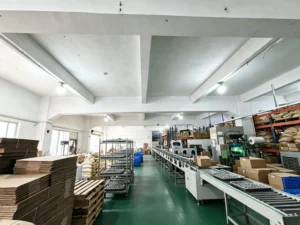
Don’t just look at total floor area — examine how the space is allocated. A blind rivet factory should have dedicated zones for production workshops, raw material storage, finished goods warehousing, and quality inspection. A manufacturer with 5,000 m² of organized production space, proper inventory management, and clearly separated functional zones is better positioned to support stable bulk supply than one with equivalent area but disorganized operations.
For example, transparent manufacturers should be able to provide details such as factory area, equipment numbers, and annual production capability.
2. Production Equipment and Automation Capability
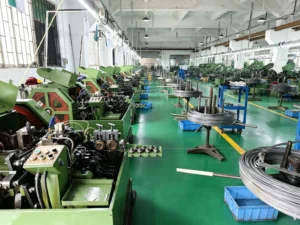
Equipment quantity alone is misleading. The right question isn’t “How many machines do you have?” — it’s “How many machines are dedicated to blind rivet production?” A manufacturer might list 300 machines on their profile, but only 50 are actually producing rivets while the rest handle unrelated products.
Focus on:
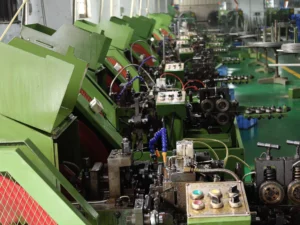
- Machine types: cold heading machines, riveting assembly machines, mandrel forming equipment, sorting machines, and automated inspection systems
- Automation level: fully automated lines produce more consistent output with lower defect rates
- Equipment condition and maintenance: well-maintained machines produce stable quality
- Dedicated vs. shared lines: machines dedicated to your product type ensure consistent scheduling
3. Actual Monthly Output and Available Capacity
Manufacturers often quote theoretical maximum capacity — what the machines could produce running 24/7. What you need is actual output and available headroom.
| Question to Ask | Purpose |
|---|---|
| What is your current monthly output? | Verify actual production, not theoretical |
| What is your maximum monthly output? | Understand the production ceiling |
| What is your current utilization rate? | Check available capacity for your order |
If a manufacturer reports 90%+ utilization, they have little room to absorb your order. A healthy utilization rate for bulk order compatibility is typically 70–85%.
How to Estimate Production Capacity
Monthly Capacity =Machines × Daily Output × Working Days × Utilization Rate
100 machines × 20,000 pcs/day × 25 days × 80%=40 million pcs/month
4. In-House Manufacturing Capability
| Factory Manufacturer | Trading Company | |
|---|---|---|
| Production lines | ✅ In-house | ❌ No control |
| QC system | ✅ Direct oversight | ❌ Limited visibility |
| Engineering support | ✅ Technical team | ❌ Relays questions |
| Custom development | ✅ Direct capability | ❌ Depends on partners |
| Price | ✅ Factory direct | ⚠️ Markup applied |
5. Quality Control and Testing Capability
Quality inspection capacity is part of production capacity. A robust QC system covers three stages:
- Incoming inspection: Incoming inspection: raw material verification, including material composition testing when required.
- In-process inspection: dimensional checking, tensile testing during production
- Final inspection: appearance, packaging, AQL-based sampling
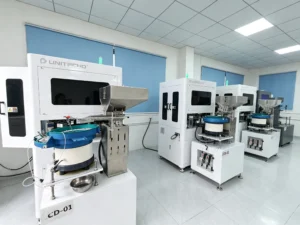
Look for ISO 9001 certification and specific testing capabilities: salt spray testing, tensile testing, hardness testing, spectrometer analysis, thread friction testing, and torque testing.
6. Export Experience and Customer Base
A manufacturer with extensive export history demonstrates documentation capability, packaging experience, and compliance awareness. Manufacturers experienced in shipping to both Southeast Asia and Western markets understand diverse compliance and logistics requirements.
7. OEM and Custom Production Capability
Verify the supplier’s custom development capabilities: custom dimensions, material combinations, surface treatments, and packaging/labeling. A manufacturer with genuine OEM capability will have a drawing review process, sample development workflow, and clear MOQ policies.
8. Inventory and Delivery Management
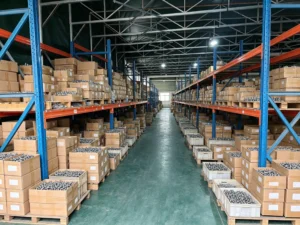
Verify safety stock levels, warehouse management systems, standard lead times, and urgent order handling capability.
4 Practical Ways to Verify a Manufacturer’s Real Production Capacity
Method 1 — Conduct a Factory Audit
An on-site factory audit is the most reliable verification method. Focus on: production machines (check nameplates), warehouse (inventory levels), QC room (actual testing equipment), and finished goods (current orders being packed). Photograph equipment nameplates, record machine counts, and observe an actual production run.
Method 2 — Request a Live Factory Video Tour
When an on-site visit isn’t feasible, a live video walkthrough is the next best option. Require real-time video (not pre-recorded), ask to see specific workstations, and request to see current production. Red flags: only showing the showroom, refusing to show nameplates, or reluctance to show the production floor.
Method 3 — Review Production Records and Export History
Request 6–12 months of production records, delivery records with volumes and lead times, export customs declarations, and on-time delivery rate data. A manufacturer with genuine capacity will have these readily available.
Method 4 — Start with a Trial Order
A pilot order at moderate volume is the most practical verification. Observe sample development speed, trial order lead time, quality consistency, and communication responsiveness. A successful trial order provides confidence for full bulk orders.
Documents to Request Before Bulk Ordering
- ISO 9001 certificate
- Material certificates (COA)
- Inspection reports
- Product drawings
- Production capacity statement
- Previous shipment records
Blind Rivet Manufacturer Evaluation Checklist
| Category | Key Questions |
|---|---|
| Production | What is your monthly output? How many machines are dedicated to blind rivets? What is your utilization rate? Can you support continuous monthly supply? |
| Equipment | What types of machines do you use? What is your automation level? Do you have dedicated lines for different rivet types? |
| Quality | What testing equipment do you have? Can you provide inspection reports? What is your AQL sampling plan? Do you have ISO 9001? |
| Delivery | What is your standard lead time? How do you handle urgent orders? What is your on-time delivery rate? |
| OEM | Can you produce custom dimensions and materials? What is your drawing review process? What is the MOQ for custom specs? |
| Export | Which countries do you export to? Can you provide redacted delivery records? What documentation do you provide? |
Before committing to a large blind rivet order, verify your supplier’s real manufacturing capability, including monthly capacity, equipment list, and quality system details.
Send us your volume requirements — we’ll provide a transparent capacity assessment for comparison.
Request Factory Capability Details
5 Red Flags When Sourcing Blind Rivets from Overseas Suppliers
1. No Factory Photos or Production Evidence
If a supplier shows only product catalog images and exhibition hall photos — but no production floor, no equipment, no warehouse — they may be a trading company posing as a manufacturer. Request recent factory photos with visible equipment nameplates.
2. Cannot Provide Production Data
A legitimate manufacturer knows their monthly output, machine count, and utilization rate. Vague answers or repeated promises to “check and get back to you” signal a lack of real production infrastructure.
3. Extremely Low Prices Without Explanation
Prices significantly below market rates often indicate inferior raw materials, outsourced production to unregulated workshops, or skipped quality inspections. Ask the supplier to explain their cost structure.
4. Long Delivery Times After Deposit
If lead times stretch dramatically after you’ve paid a deposit, the manufacturer over-promised on capacity. Quoted 15 days, actual 45 days — a hallmark of capacity-constrained operations.
5. Complete Dependence on Outsourcing
Some “manufacturers” are sales offices that outsource 100% of production. Without in-house lines, they have no quality control leverage and no ability to prioritize your order. Ask directly: “Which products do you manufacture in-house?”
How Capacity Requirements Differ Between Large Orders and Continuous Supply
| Large One-Time Order | Long-Term Continuous Supply | |
|---|---|---|
| Primary Focus | Peak production capacity | Production stability and consistency |
| Raw Materials | Bulk material availability | Ongoing supply chain stability |
| Quality Control | Batch-level inspection | Continuous monitoring |
| Inventory | Finished goods staging | Safety stock + forecast planning |
| Lead Time | Single delivery deadline | Consistent monthly lead times |
| Key Question | “Can you produce X units by Y date?” | “Can you sustain X units/month for 12 months?” |
Example: How RivetFast Demonstrates Manufacturing Capability
Based on the verification factors above, RivetFast provides buyers with transparent production information including
High Production Capacity
RivetFast operates a 5,000 m² dedicated manufacturing facility with 200+ automated machines, achieving an annual production capacity of 2 billion pieces. This scale supports both large one-time orders and continuous monthly supply agreements.
Complete Quality Testing System
RivetFast’s testing laboratory is equipped with: salt spray testing, tensile testing, hardness testing, spectrometer analysis, thread friction testing, and torque testing. Every batch ships with verifiable quality data.
OEM Manufacturing Support
End-to-end OEM support: drawing review, custom dimensions, material combinations (aluminum-steel, aluminum-stainless, all-stainless), surface treatments, and custom packaging/labeling.
Blind Rivet Manufacturer Capacity Verification Checklist
- Factory size and layout documented (production / warehouse / QC zones)
- Equipment list with machine types and dedicated blind rivet machine count
- Monthly output figures (actual vs. maximum) with utilization rate
- Production records for past 6–12 months reviewed
- Quality control system documented (3-stage inspection + AQL plan)
- Testing equipment verified (tensile, shear, salt spray, spectrometer, etc.)
- Raw material inventory and supply chain stability confirmed
- Delivery history and on-time delivery rate reviewed
- OEM/custom development capability assessed
- Export experience and documentation capability verified
Conclusion
Verifying a blind rivet manufacturer’s production capacity before bulk ordering isn’t about distrust — it’s about eliminating procurement risk before it becomes a supply chain crisis. The 8 factors, 4 verification methods, and evaluation checklist in this guide give you a practical framework to separate manufacturers who can deliver from those who merely claim they can.
Remember: a supplier who welcomes verification is a supplier who has nothing to hide. The right manufacturer will provide factory access, production data, quality reports, and delivery records as part of standard business practice.
Need a stable blind rivet supplier for your next bulk order?
Send your specifications and expected volume — we’ll provide a transparent capacity assessment and realistic delivery timeline within 24 hours.
Get a Production Capability Assessment Within 24 Hours
FAQ
Q1: How can I verify a blind rivet manufacturer’s production capacity?
Q2: How do I know if a rivet supplier is a factory or a trading company?
Q3: What production capacity should a blind rivet manufacturer have for bulk orders?
Q4: What documents should I request from a blind rivet supplier?
Q5: What are red flags when evaluating a rivet supplier’s capacity?
Q6: Can a blind rivet manufacturer support customized OEM orders?
Q7: How long should a blind rivet supplier’s lead time be for bulk orders?